
10 Critically Endangered Animals You Can See on Safari
Ten critically endangered species, from black rhinos to Yangtze porpoises, face extinction within decades. Poaching, habitat loss and illegal trade drive the decline.

Africa and Asia are home to species facing extinction within our lifetime, many with populations measured in the hundreds.
TL;DR: Ten critically endangered species including the black rhino, Cross River gorilla and Vaquita face extinction from poaching, habitat destruction and illegal trade. Populations range from fewer than 30 Vaquitas to around 2,500 Sumatran elephants. Responsible safari operators offer sightings of African species like black rhinos in protected reserves.
Key takeaways
Black rhino horn sells for five times the price of gold, driving poaching that has decimated populations across Africa.
The Vaquita has fewer than 30 individuals left and may be extinct by 2025.
Only four Saola have ever been encountered by scientists in the wild; none exist in captivity.
Amur leopards number around 80, all confined to a small region in Russia.
Private Kruger Park reserves offer the safest black rhino sightings on luxury safaris with armed anti-poaching units.
Female Tapanuli orangutans birth only once every three to five years, making population recovery extremely slow.
1. Black rhino
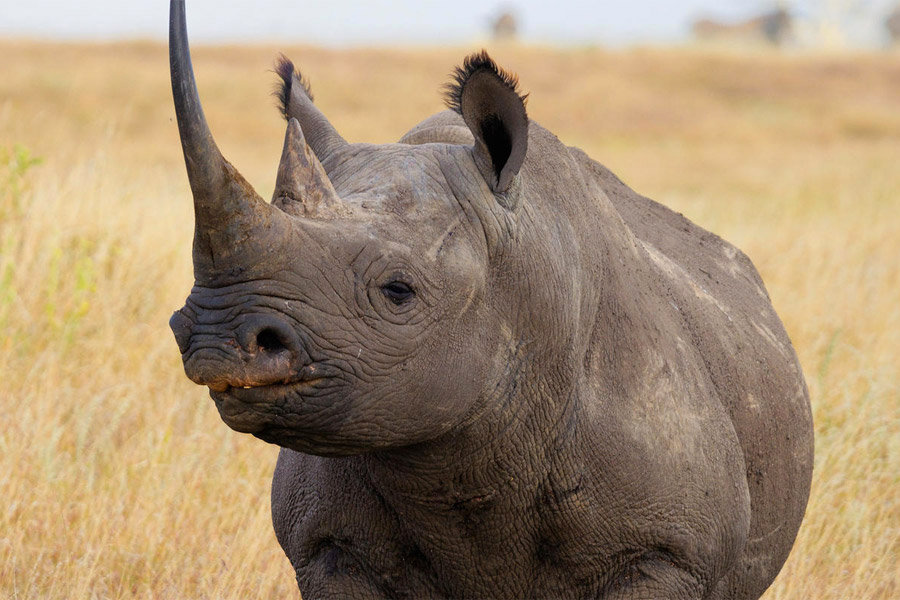
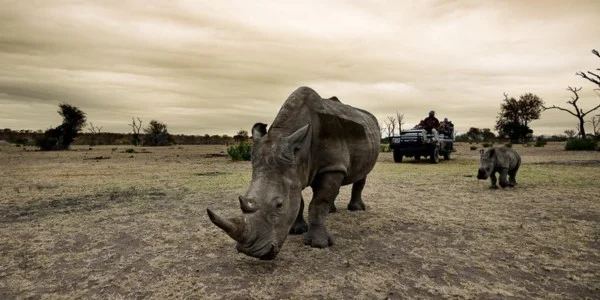
The black rhino is Africa's most endangered large mammal. Poaching for horn, which sells for roughly five times the price of gold on Asian black markets, has reduced populations by over 90% since 1970. Fewer than 6,000 black rhinos remain across the continent, concentrated in South Africa, Namibia, Kenya and Zimbabwe.
Rhino horn is ground into powder and sold as traditional medicine in Vietnam and China, despite having no proven medicinal properties. A single horn can fetch $60,000 or more, making rhinos a prime target for armed poaching syndicates.
Where can you see black rhinos on safari?
Private reserves adjoining Kruger National Park offer the most reliable black rhino sightings. Sabi Sands, Timbavati and Klaserie employ dedicated anti-poaching units and tracking teams. These areas are accessible only on high-end safaris costing $600 to $1,500 per person per night. Black rhinos are also present in Etosha (Namibia), Lewa and Ol Pejeta conservancies (Kenya), and Phinda and Hluhluwe-iMfolozi (South Africa).
Seychelles Island Escape
Visit the jewel of the Indian Ocean with blue azure waters and white sandy beaches.
Plan My Safari2. Cross River gorilla
Fewer than 300 Cross River gorillas survive in fragmented forests on the Nigeria-Cameroon border. Hunting is illegal in both countries but enforcement is weak. Each death affects this already tiny population, and the species suffers from inbreeding because groups live in isolation and rarely interact.
Habitat fragmentation from logging and agriculture has pushed these gorillas into highland refuge areas. They share 98% of human DNA and exhibit complex social behaviour, but remain one of the world's rarest great apes.
3. Tapanuli orangutan
The Tapanuli orangutan was identified as a distinct species only in 2017. Approximately 800 individuals remain in the Batang Toru forest of North Sumatra, making it the most endangered great ape species. Females give birth only once every three to five years and raise a single infant, so population recovery is exceptionally slow.
Humans share 96.4% of genes with orangutans. Habitat loss from palm oil plantations, road construction and a proposed hydroelectric dam threaten the species with extinction within decades if current trends continue.
4. Sumatran tiger
Fewer than 400 Sumatran tigers remain in the wild, down from around 1,000 in 1978. Poaching accounts for 78% of deaths, with an average of 40 tigers killed each year for skins, bones and other body parts sold in traditional medicine markets.
The Sumatran tiger is the smallest surviving tiger subspecies, adapted to dense forest habitat. National parks such as Gunung Leuser, Kerinci Seblat and Bukit Barisan Selatan hold the remaining populations, but patrols struggle to cover vast terrain with limited budgets.
5. Hawksbill turtle
The hawksbill turtle has existed for over 100 million years but faces extinction from illegal shell trade. The distinctive tortoiseshell pattern fetches high prices for jewellery, combs and ornaments. Around 20,000 nesting females remain worldwide, a fraction of historical numbers.
Hawksbills nest on tropical beaches and feed primarily on sponges in coral reefs. Egg collection, fishery bycatch, coastal development and marine debris all contribute to population decline. The species is protected under international law but enforcement varies widely.
6. Vaquita
The Vaquita is the world's rarest marine mammal. Fewer than 30 individuals survive in a small area of Mexico's Gulf of California. Fishery bycatch, especially in illegal gillnets set for totoaba fish, kills roughly 20% of the population annually. Most scientists expect the species to be functionally extinct by 2025 without immediate intervention.
Vaquitas are small porpoises measuring around 1.5 metres. They cannot be kept in captivity and all rescue attempts have failed. The Mexican government has banned gillnets in the Vaquita refuge area, but illegal fishing continues.
Why is the Vaquita almost extinct?
Illegal gillnet fishing for totoaba, a large fish whose swim bladder sells for up to $50,000 per kilogram in China, traps and drowns Vaquitas as bycatch. The totoaba fishery operates despite bans because profits are enormous and enforcement is inadequate. Vaquitas reproduce slowly, with females bearing one calf every two years, so the population cannot recover from ongoing deaths.
7. Amur leopard
Approximately 100 Amur leopards survive in the wild, nearly all in the temperate forests of Russia's Primorye region along the Chinese border. Poaching for skins, which sell for over $2,000 on black markets, remains the primary threat despite legal protection.
The Amur leopard is the rarest big cat. It can run at 37 mph, leap 10 feet vertically and 19 feet horizontally, and survives winter temperatures below minus 25°C. Captive breeding programmes hold another 200 individuals in zoos worldwide.
8. Sumatran elephant
Between 2,400 and 2,800 Sumatran elephants remain, confined to fragmented patches of forest in Sumatra. Deforestation for palm oil and pulpwood plantations has destroyed 70% of their habitat in the past 25 years. Ivory poaching and human-elephant conflict also kill dozens each year.
Tesso Nilo National Park was established to protect remaining habitat, but illegal encroachment continues. Sumatran elephants are smaller than African elephants and live in matriarchal herds. Males are poached for ivory tusks sold on Asian black markets.
Visit Cape Town
Visit the number one rated city in the world with 8 blue flag beaches, swimming with penguins and so much more
Plan My Safari9. Saola
The Saola is called the Asian unicorn because it is so rarely seen. Discovered in 1992 in the Annamite Mountains of Vietnam and Laos, it has been directly observed only four times by scientists. Zero Saola exist in captivity; all capture attempts have ended in death within days.
Population estimates range from 60 to 300 individuals. The Saola inhabits remote montane forests and is threatened by snares set for other species, habitat loss and hunting. Its biology and behaviour remain almost entirely unknown.
10. Yangtze finless porpoise
The Yangtze finless porpoise is the only freshwater porpoise species. Between 1,000 and 1,800 survive in the Yangtze River and adjacent lakes, down from an estimated 5,000 in the 1990s. Overfishing has collapsed prey populations, starving porpoises that require large amounts of food daily.
The species is considered as intelligent as a gorilla. Dam construction, ship traffic, pollution and illegal fishing all contribute to decline. China has established reserves and banned commercial fishing in parts of the Yangtze, but enforcement remains inconsistent.
Can travellers contribute to conservation efforts on safari?
Many safari operators in South Africa, Kenya and Namibia offer conservation experiences where travellers participate in rhino monitoring, wildlife veterinary work or anti-poaching patrols. Programmes typically cost $150 to $400 per day on top of standard safari rates. Proceeds fund ranger salaries, equipment and community conservation projects. Ask your safari planner about rhino chipping programmes, where you can observe veterinary teams fitting tracking devices to rhinos under anaesthesia.
Frequently asked questions
Which endangered species can I realistically see on an African safari?
Black rhinos are the most accessible critically endangered species on African safaris. Private reserves adjoining Kruger Park, plus Etosha, Lewa, Ol Pejeta and Phinda, offer sightings.
Mountain gorillas in Rwanda, Uganda and Congo are endangered (not critically) but accessible via permit-controlled treks costing $700 to $1,500. Other critically endangered species on the global list live in Asia and are not part of African safari itineraries.
How much does a safari that supports rhino conservation cost?
Expect to pay $600 to $1,500 per person per night at lodges in private reserves with active rhino populations and anti-poaching programmes.
A five-night safari runs $3,000 to $7,500 per person, excluding flights. Budget safaris in public parks like Kruger cost $200 to $400 per night but offer fewer rhino sightings and less direct conservation involvement. Specialist conservation experiences add $150 to $400 per day.
Why is poaching still so widespread despite laws protecting these animals?
Illegal wildlife trade is worth an estimated $23 billion annually, making it the fourth-largest illegal trade globally after drugs, humans and arms.
Enforcement is weak in many range states due to corruption, insufficient funding and vast territories that are impossible to patrol effectively. Demand for rhino horn, ivory, tiger parts and other products remains high in Asia, where traditional medicine markets and status symbols drive prices that far exceed local incomes in poaching regions.
What is the best time of year to see black rhinos on safari?
Dry season months (May to October in southern Africa, June to October in East Africa) offer the best rhino sighting opportunities. Vegetation is sparse, animals concentrate around water sources, and dirt roads are passable.
Black rhinos are solitary and favour thick bush, so sightings require expert trackers and patient game drives even in reserves with healthy populations. Plan at least four to five days in a single reserve to maximise your chances.
Are there any success stories in endangered species conservation?
Southern white rhino populations recovered from fewer than 100 individuals in the early 1900s to over 18,000 today through sustained protection and anti-poaching efforts in South Africa. Mountain gorillas increased from 620 in 1989 to over 1,000 in 2023 thanks to community-based conservation and tourism revenue.
Black rhino numbers have stabilised and grown slightly in key reserves over the past decade, though they remain critically endangered. These successes required decades of funding, political will and local community involvement.
How can I ensure my safari supports genuine conservation?
Book with operators that contribute directly to conservation NGOs, employ local rangers, and transparently report conservation funding. Look for lodges certified by Fair Trade Tourism, Travelife or similar schemes. Ask what percentage of fees goes to anti-poaching, community projects or wildlife research. Avoid operators offering interactions with captive predators or walking with lions, which often fund exploitative breeding programmes.
Your safari planner should be able to provide specifics on conservation partnerships and spending.
Last updated: July 2026