
The Okavango Delta in northwest Botswana is one of Africa's most sought-after luxury safari destinations, combining permanent waterways, seasonal floodplains, and concentrations of wildlife accessible only by light aircraft and boat.
The Okavango Delta is a UNESCO World Heritage wetland in northwest Botswana offering remote, high-end lodge safaris from around $487 per person per night (all-inclusive). Best visited May to September for dry-season game viewing, the Delta supports 50,000+ elephants, Big Five populations, and unique mokoro canoe safaris. Top lodges include Mombo Camp, Chief's Camp, and Abu Camp, accessible only by charter flight.
Key takeaways
The Delta is a permanent inland delta fed by the Okavango River, flooding seasonally from May to September.
Luxury lodges range from around $487 to over $800 per person per night, all-inclusive of meals, activities, and most drinks.
May to September is peak season: dry weather, high water levels, and concentrated wildlife make game viewing easiest.
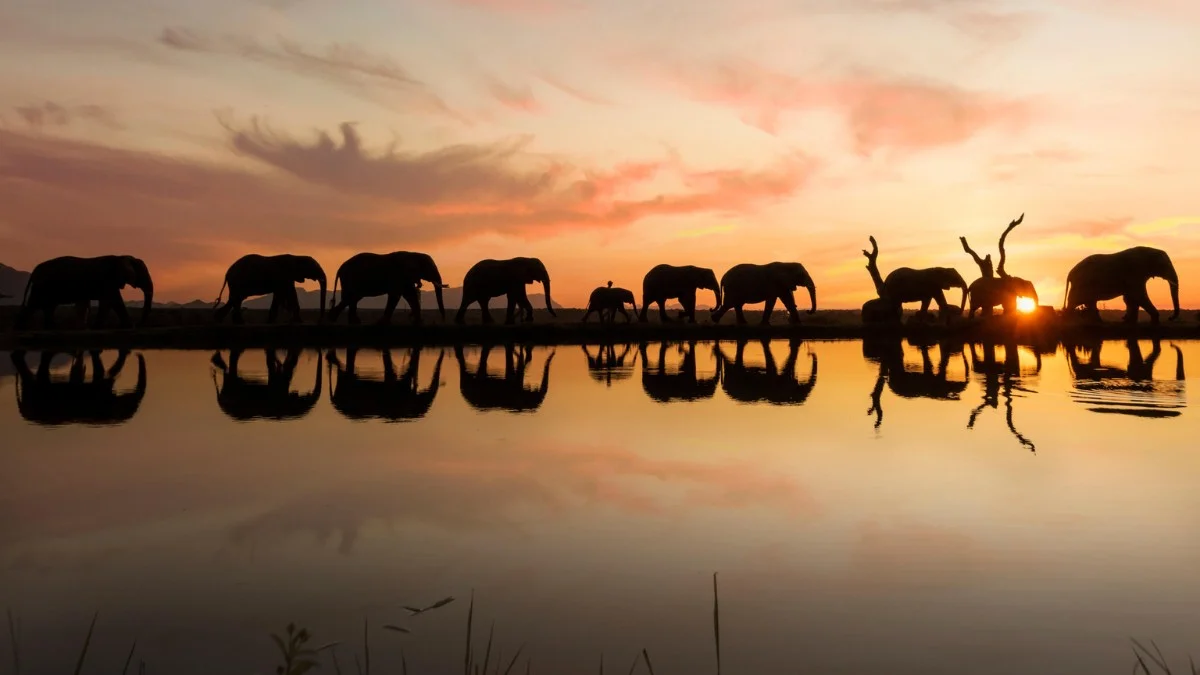
The Delta is home to more than 50,000 elephants, 160 mammal species, and over 400 bird species.
Signature activities include 4x4 game drives, mokoro (dugout canoe) safaris, walking safaris, and hot air balloon flights.
Access is by light aircraft only; lodges sit on private concessions or islands, ensuring exclusivity and low guest density.
When to visit the Okavango Delta
The best months to visit are May through September. This is the Delta's dry, winter season, when daytime temperatures range from 25°C to 32°C and nights drop to 6°C to 15°C.
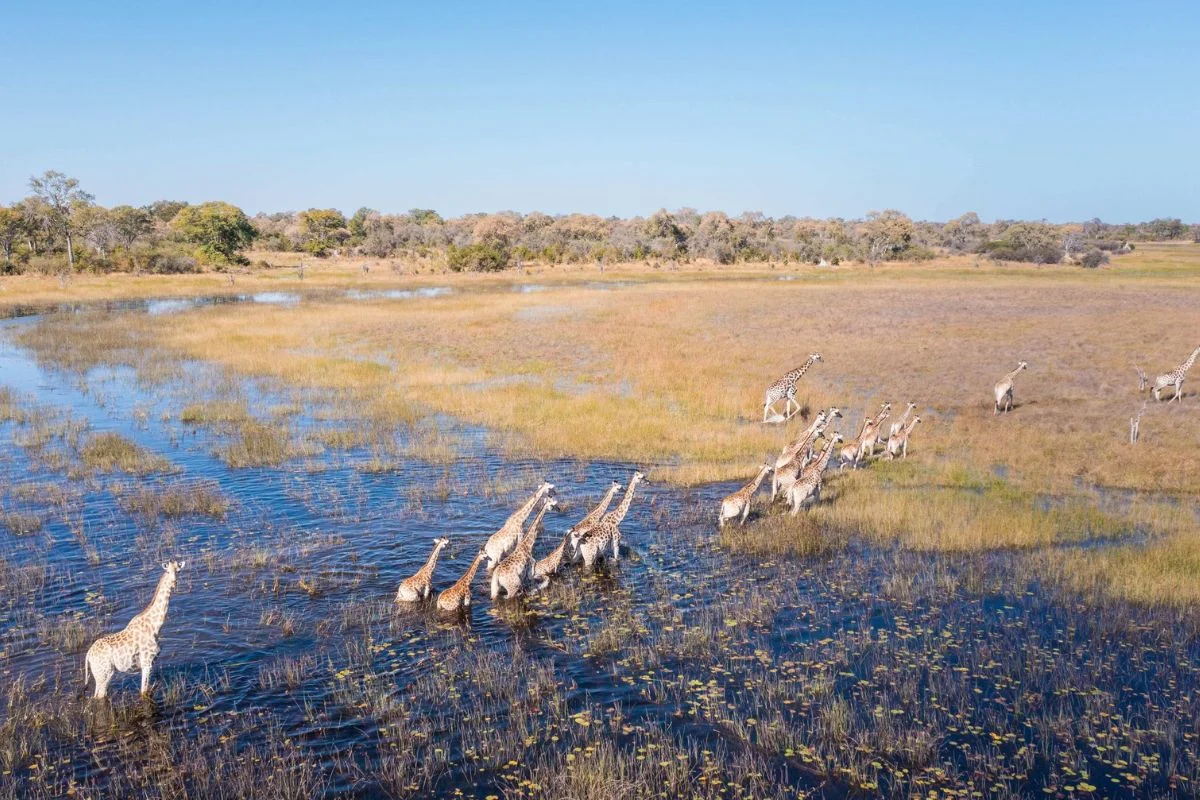
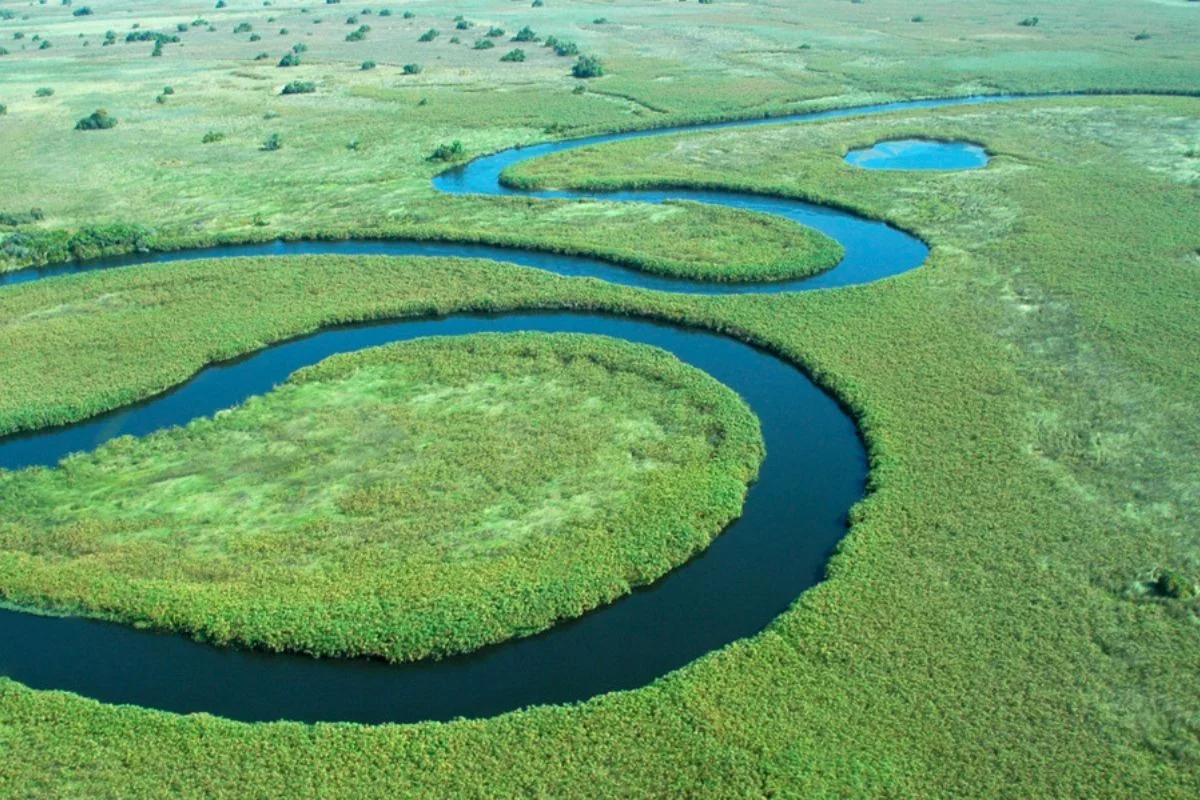
Floodwaters from Angola's seasonal rains arrive during these months, raising water levels and transforming the landscape into a mosaic of channels, lagoons, and islands. Wildlife concentrates around permanent water sources, and vegetation thins out, improving sighting reliability.
October to April is the wet, summer season. Temperatures climb to 32°C to 35°C in October and November, often with afternoon thunderstorms from December to March.
Water levels recede, many lodges close or run on reduced schedules, and migratory birds depart. Game viewing is less predictable, though green-season rates can drop by 20 to 40 per cent at lodges that remain open.
Is the shoulder season worth considering?
April and October sit at the edges of peak season and can offer good value. April sees the tail end of summer rains and early flood arrival; October has low water but high concentrations of animals and excellent predator activity as prey gathers near remaining waterholes. Both months typically cost 10 to 20 per cent less than June to August, and lodges are quieter.
Okavango Delta — best time to visit
| J | F | M | A | M | J | J | A | S | O | N | D | |
|---|---|---|---|---|---|---|---|---|---|---|---|---|
| High °C | 32° | 31° | 31° | 30° | 28° | 25° | 25° | 28° | 32° | 34° | 33° | 32° |
| High °F | 90° | 88° | 88° | 86° | 82° | 77° | 77° | 82° | 90° | 93° | 91° | 90° |
| Rain mm | 110 | 90 | 70 | 25 | 5 | 0 | 0 | 0 | 5 | 35 | 65 | 95 |
| Rating |
Okavango Delta: Floodwaters peak Jun–Aug — prime mokoro and game viewing; summer is hot and wet.
Ideal — Peak conditions — dry, comfortable, prime wildlife or beach time.
Good — Great conditions with brief showers or warmer days; still highly recommended.
Shoulder — Mixed weather — fewer crowds and lower rates, occasional rain.
Avoid — Heaviest rain or roughest seas; many camps and roads can be affected.
Activities in the Okavango Delta
The Delta's mix of water and land habitats supports a wider range of safari activities than most terrestrial parks.
4x4 game drives
Open-top 4x4 vehicles carry up to six guests, though most luxury lodges cap groups at four for better sightlines. Morning drives begin at sunrise (around 06h00 in winter) and run three to four hours; afternoon drives start mid-afternoon and continue into dusk with spotlights after dark.
Guides hold professional qualifications and communicate by radio to track predator movements. Expect sightings of elephant herds, buffalo, giraffe, lion, leopard, cheetah, wild dog (seasonally), and plains game including lechwe, tsessebe, and kudu.
Mokoro canoe safaris
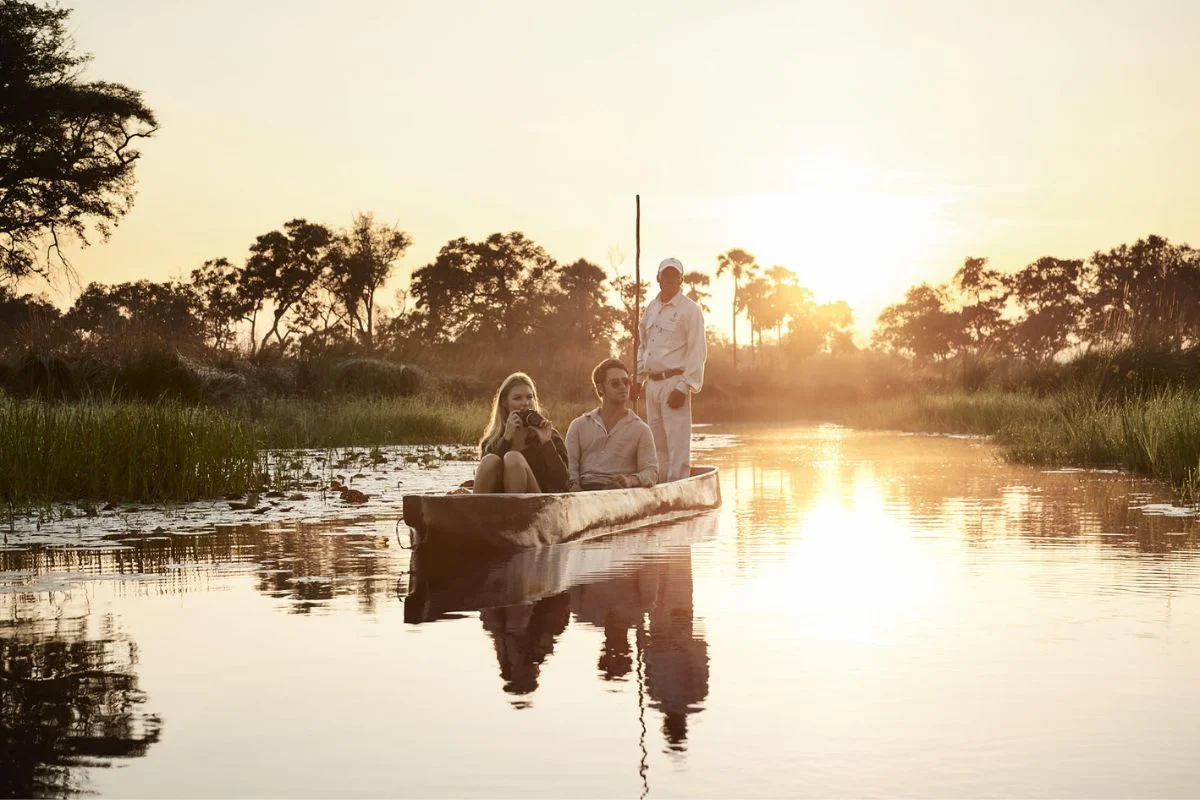
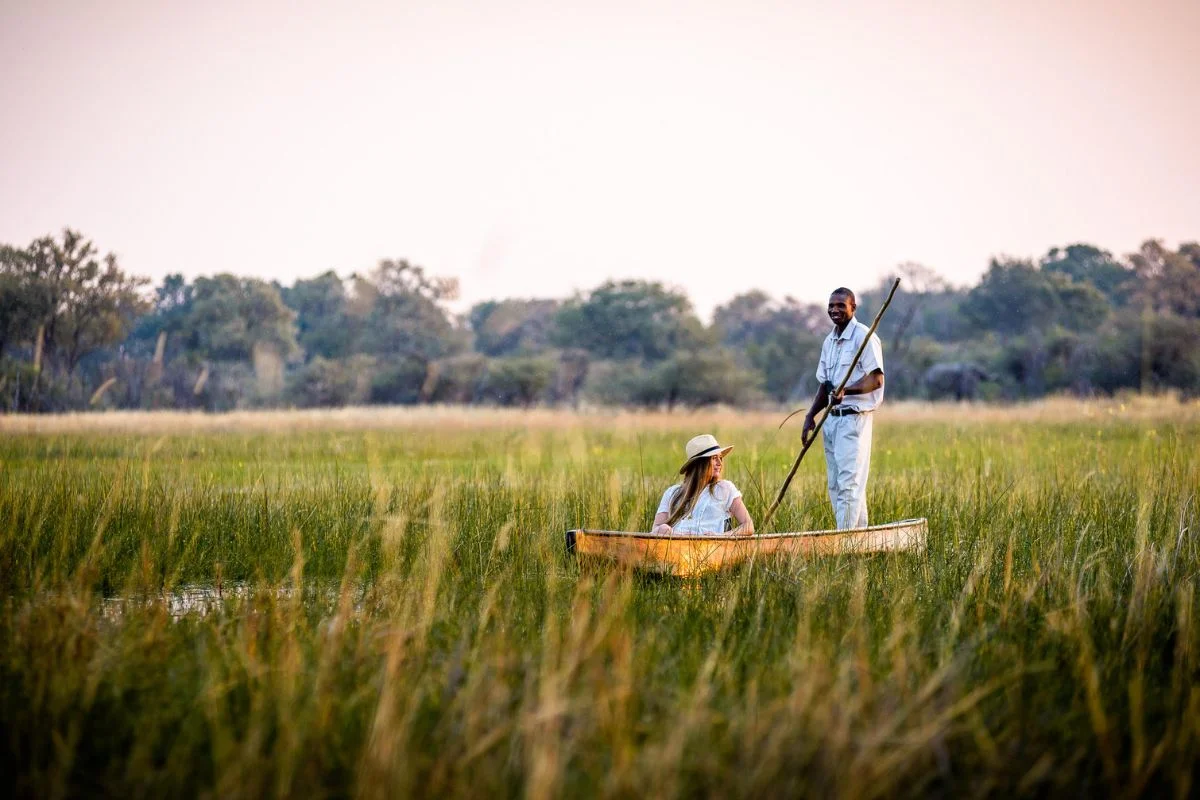
The mokoro is a traditional dugout canoe (now mostly fibreglass for conservation) poled silently through shallow channels by a guide standing at the stern. Trips last one to three hours and are best on calm mornings. You glide past hippos, crocodiles, wading birds, and grazing lechwe, often within metres. Mokoro safaris are unique to Botswana's waterways and unavailable in most other safari regions.
Walking safaris
Guided walks run one to two hours, usually mid-morning after the first game drive. Armed guides (required by law) focus on tracking, spoor identification, insects, smaller mammals, and bush craft rather than close encounters with dangerous game. Walks depart daily from most lodges and are included in the nightly rate.
Hot air balloon and helicopter safaris
Balloon flights launch at dawn and last 60 to 90 minutes, drifting over floodplains and herds. A champagne breakfast follows landing. Helicopter safaris offer similar aerial views with more control over routes and duration. Both cost $400 to $600 per person and require advance booking; not all lodges offer them on-site, so confirm availability when planning.
Birdwatching
The Delta hosts over 400 bird species, including African fish eagle, malachite kingfisher, lilac-breasted roller, wattled crane, and Pel's fishing owl. Dedicated birding safaris run year-round, with peak diversity from November to March when migrants arrive. Many lodges offer birding from private decks overlooking lagoons, and guides carry field reference books.
What makes elephant interaction ethical here?
A small number of lodges, notably Abu Camp, offer guided walks alongside habituated elephant herds originally rescued or orphaned. These interactions are supervised by trained handlers, last 30 to 60 minutes, involve no riding or performing, and emphasise observation and education. Book weeks in advance; space is limited, and not all properties offer this activity.
Seychelles Island Escape
Visit the jewel of the Indian Ocean with blue azure waters and white sandy beaches.
Plan My SafariTop lodges in the Okavango Delta
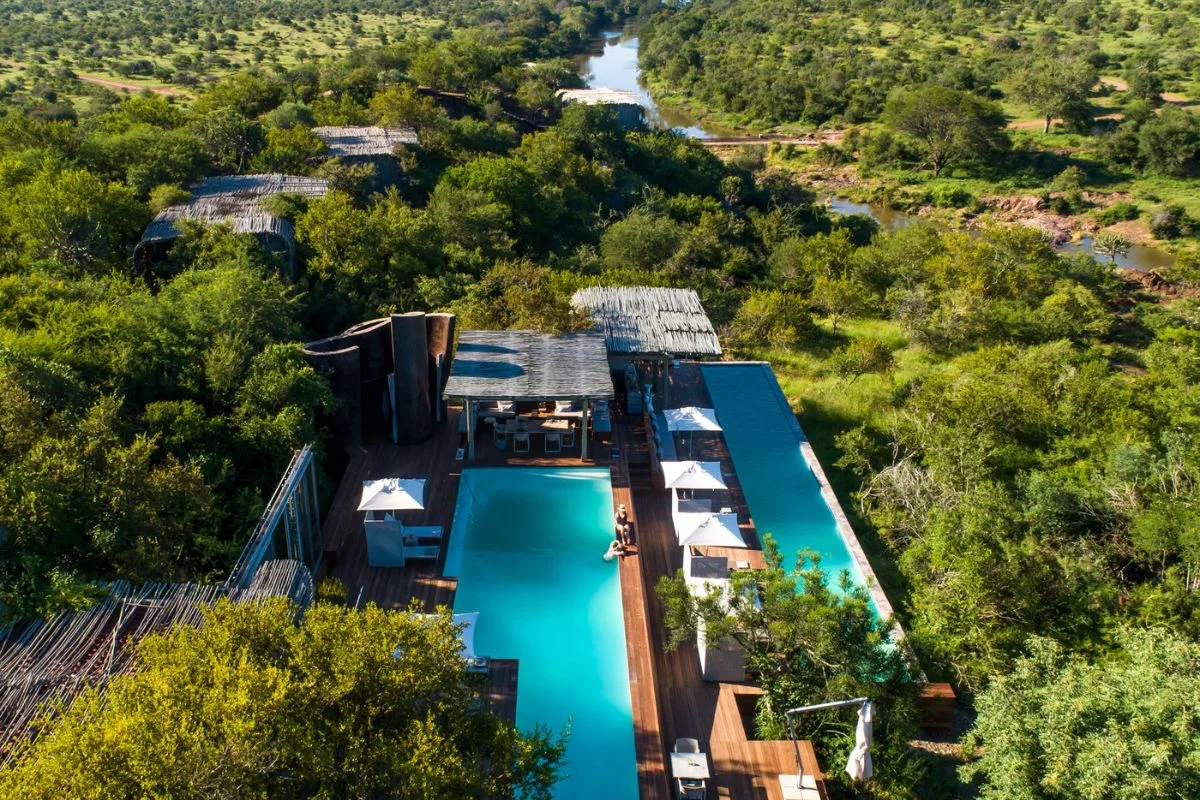
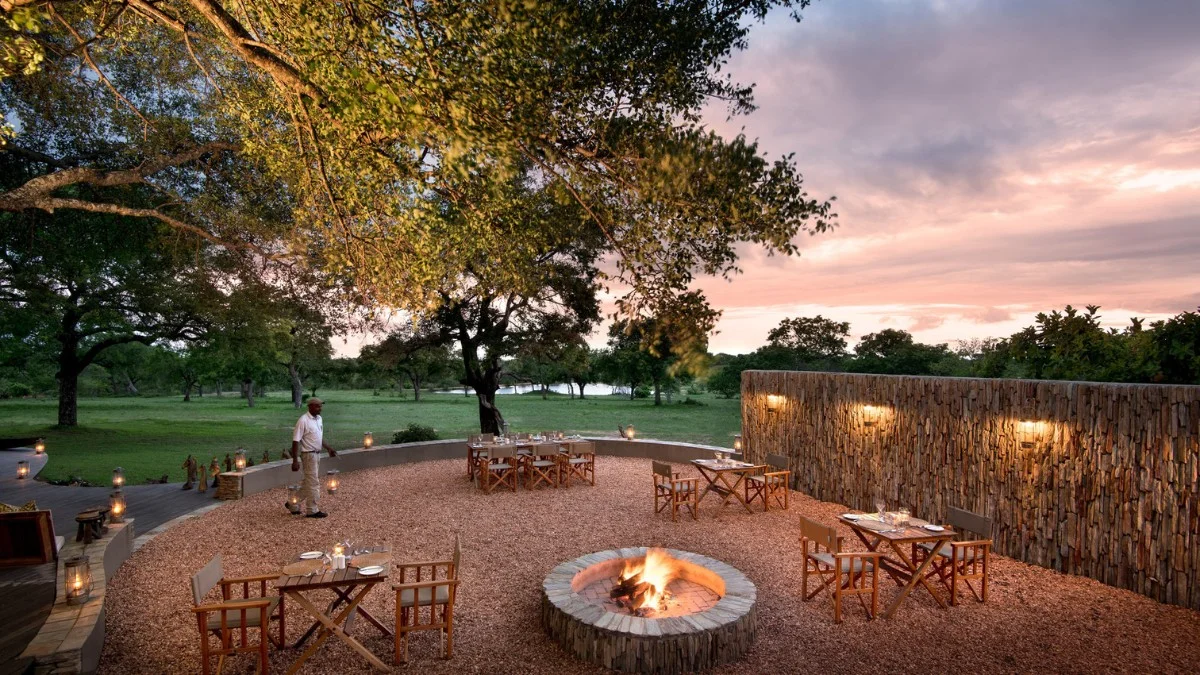
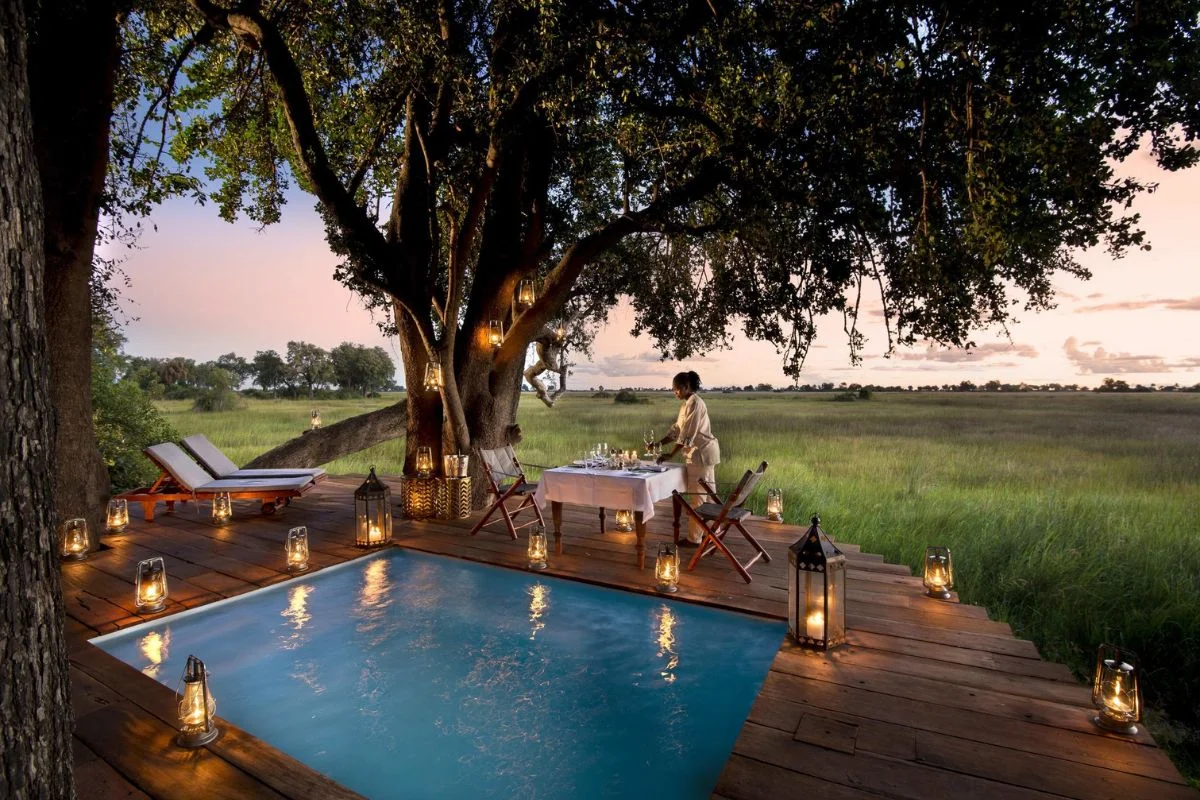
The Delta's luxury lodges sit on private concessions or leased islands within the Moremi Game Reserve, accessed only by light aircraft. Most operate May to October; a few stay open year-round. Rates are fully inclusive: accommodation, meals, local drinks (beer, wine, spirits, soft drinks), laundry, twice-daily activities, and park fees. Excluded: premium imported alcohol, spa treatments, and charter flights.
1. Mombo Camp
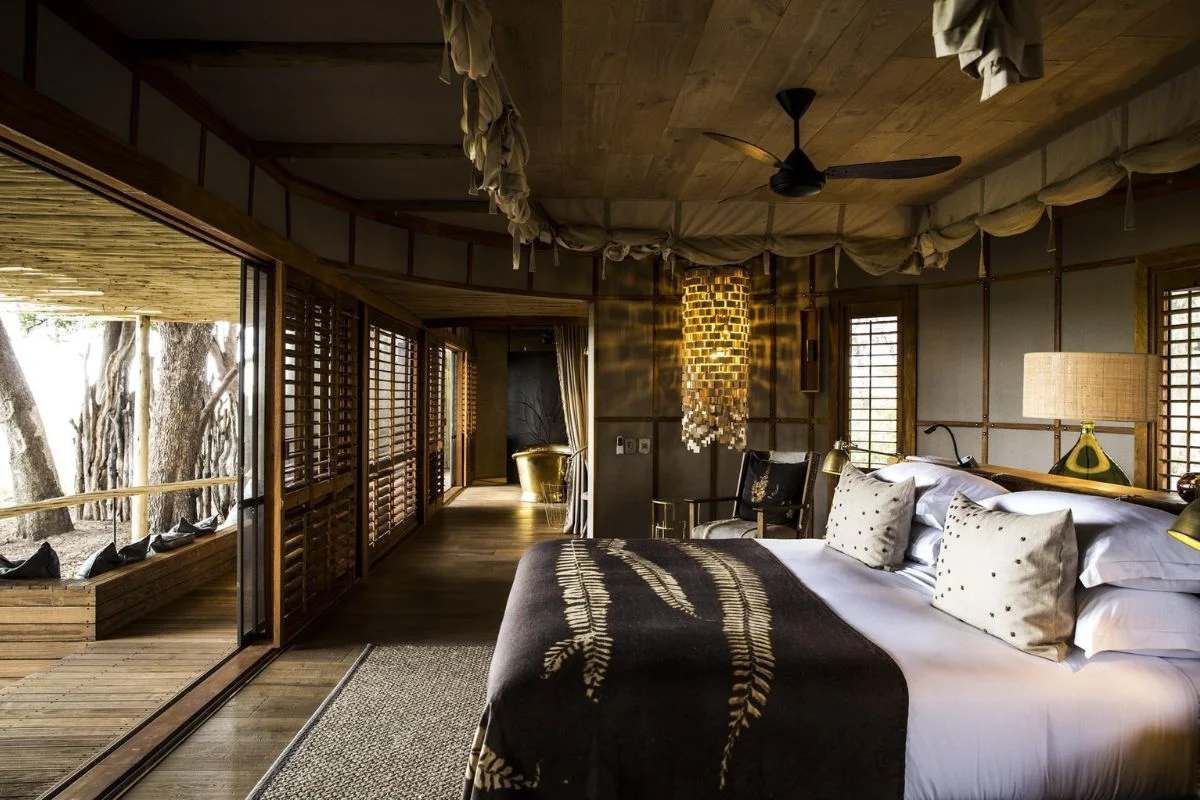
Mombo Camp, run by Wilderness Safaris, occupies a prime site on Chief's Island in the Moremi Game Reserve and is widely considered one of Africa's best lodges for predator sightings.
The camp has eight tented suites, each with floor-to-ceiling glass, plunge pools, indoor and outdoor showers, and views over permanent floodplains that draw dense concentrations of buffalo, elephant, lion, leopard, and wild dog. Rates start around $1,200 per person per night in high season.
The camp's private concession allows off-road driving and night drives, both prohibited in public sections of Moremi.
2. Chief's Camp
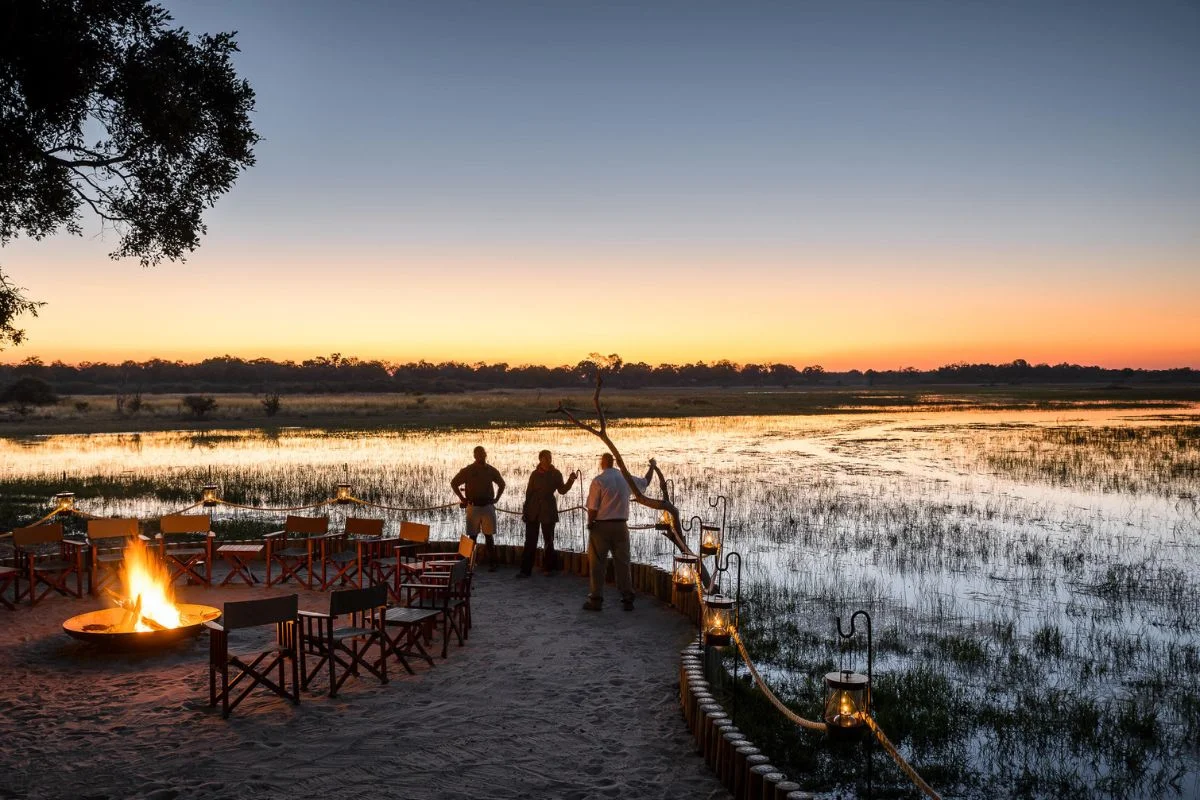
Chief's Camp, operated by Sanctuary Retreats, sits on Chief's Island adjacent to Mombo and shares similar terrain and wildlife.
The property underwent a full redesign in recent years and now has 12 pavilion-style suites with private pools, air conditioning, and contemporary safari decor.
Facilities include a gym, spa, family suites, and a kids' play area. Activities mirror Mombo's (game drives, mokoros, walks), and rates run $900 to $1,100 per person per night. The camp is open year-round.
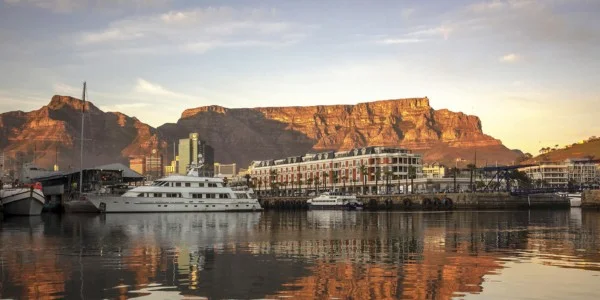
Visit Cape Town
Visit the number one rated city in the world with 8 blue flag beaches, swimming with penguins and so much more
Plan My Safari3. Xugana Island Lodge
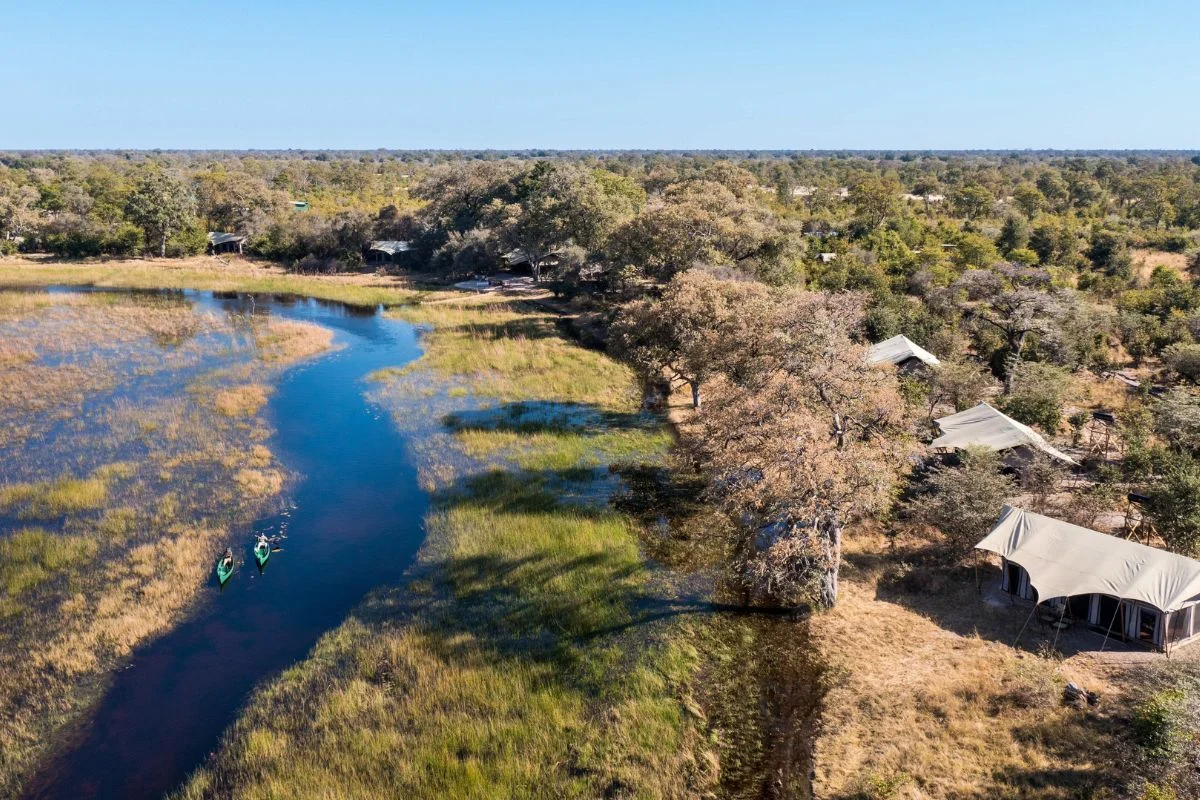
Xugana Island Lodge, part of Desert and Delta Safaris, is located on a small island surrounded by permanent deep water in the central Delta. The lodge has eight tented suites on raised wooden decks.
Activities emphasise water-based safaris: mokoro trips, motorboat excursions, and fishing (catch and release). Game drives are limited because the island's size restricts vehicle routes, so Xugana suits travellers prioritising water safaris and birdwatching over Big Five viewing.
Rates start around $650 per person per night, making it a mid-tier option within the Delta's luxury bracket.
4. Vumbura Plains
Vumbura Plains, also by Wilderness Safaris, comprises two separate seven-room camps (North and South) on a 60,000-hectare private concession in the northern Delta. The split layout offers greater privacy.
All 14 suites have plunge pools, sala decks, and floor-to-ceiling canvas walls. The concession spans both permanent waterways and dry-season floodplains, allowing year-round access to land and water activities. Rates range from $1,000 to $1,300 per person per night. Vumbura is known for reliable wild dog sightings from May to September.
5. Abu Camp
Abu Camp sits on a 180,000-hectare private concession in the western Delta and is the only lodge offering guided elephant interactions with a resident herd.
The camp has six suites, each with private pool, air conditioning, indoor and outdoor showers, and butler service.
Activities include game drives, mokoro safaris, and the morning elephant experience (additional cost). Rates start around $1,400 per person per night, placing Abu at the top end of Delta pricing. The camp closes December to March.
6. Duba Plains
Duba Plains, owned and operated by Great Plains Conservation founders Dereck and Beverly Joubert, occupies a 33,000-hectare private reserve in the northern Delta known for lion and buffalo.
The camp has five tented suites styled in 1920s safari aesthetic, with vintage trunks, brass fittings, and canvas interiors. The concession supports one of the Delta's largest lion prides and frequent leopard sightings. Rates run $1,200 to $1,500 per person per night. Duba is adults-only and closes during the wet season.
Okavango Delta costs and budgeting
Nightly lodge rates in the Okavango Delta range from around $487 per person sharing (three- or four-star properties in shoulder months) to over $1,500 at flagship camps in peak season.
Most travellers budget for three to four nights, yielding a total lodge cost of $1,950 to $6,000 per person. Add charter flights (around $350 to $500 per person one-way from Maun to your lodge) and international flights to Johannesburg or Maun, and a typical Delta-only safari costs $4,000 to $10,000 per person for four nights, all-inclusive once on the ground.
Combining the Delta with Chobe National Park or the Kalahari adds $1,500 to $3,000 per person, depending on lodge tier and length.
Most operators quote packages inclusive of internal flights, ground transfers, and all lodge stays; tipping (around $20 to $30 per guest per day, split between guide and camp staff) is the main additional cost.
Are there lower-cost options in the Delta?
A handful of lodges and mobile camping operators offer rates from $250 to $400 per person per night, typically in the eastern Delta or on the fringes of Moremi.
These properties provide simple tented accommodation, shared game drives, and basic meals but lack the private concessions, plunge pools, and off-road access that define the top-tier lodges. For budget-conscious travellers, consider splitting your safari: two nights at a mid-tier Delta lodge and two nights at a premium property elsewhere in Botswana.
How to plan your Okavango Delta safari
Book six to twelve months ahead for travel in June, July, or August, when top lodges fill early.
Confirm that your lodge is open during your chosen dates (many close December to March) and that charter flight schedules align with your international connections through Johannesburg or Maun.
Most operators handle all logistics: charter bookings, lodge reservations, and ground transfers. Solo travellers pay single supplements of 50 to 100 per cent; ask whether the lodge can match you with another solo guest to share and split the supplement.
Pack lightweight, neutral-toned clothing (khaki, olive, beige), a warm fleece or down jacket for early-morning drives in winter, sun protection (wide-brimmed hat, SPF 50, sunglasses), insect repellent (mosquitoes are present year-round but peak in summer), binoculars, and a camera with a telephoto lens (200 to 400 mm).
Luggage limits on charter flights are strict: 20 kg per person in soft-sided bags only. Check your lodge's laundry policy; most include daily service at no charge.
Last updated: October 2026