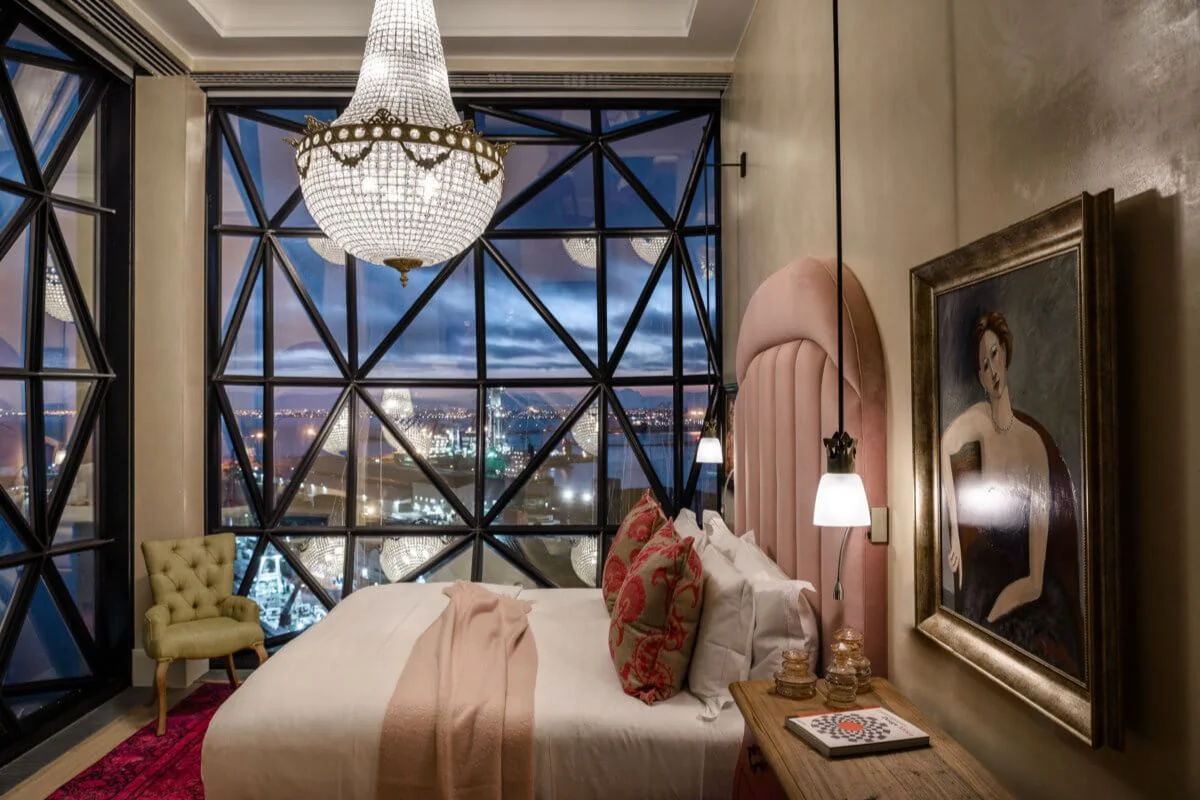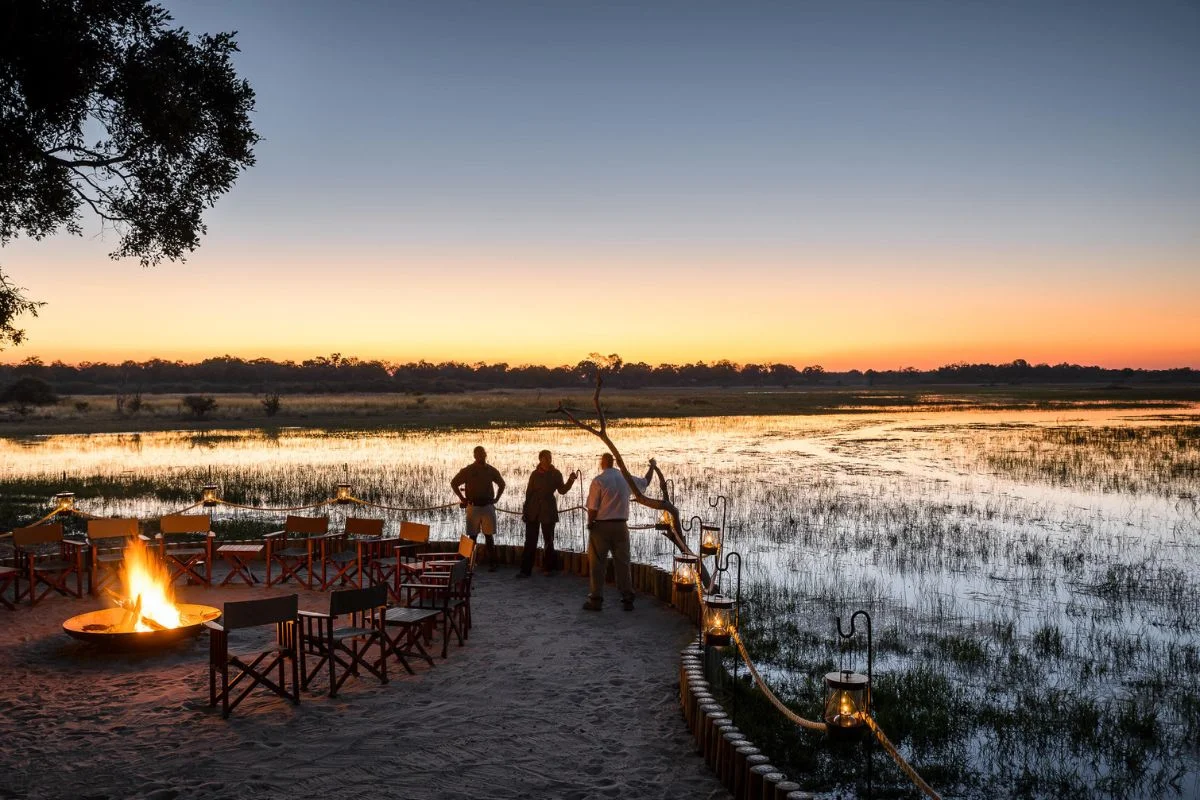


Botswana is the ultimate remote, romantic, luxury honeymoon safari destination in Africa with unique experiences like mokoro safaris and more.
Botswana honeymoons deliver Africa's most exclusive safari through low volume tourism, intimate luxury camps (from 4 to 5 star plus tiers) and unique waterway experiences in the Okavango Delta. Expect private game drives, mokoro canoe journeys and exceptional wildlife (Big Five, wild dogs, 600 bird species) in pristine wilderness with personalised service tailored for couples.
Botswana is the dream remote luxury safari honeymoon destination with premier lodges and camps providing unique access to waterways and local wildlife.
Key takeaways
- Botswana enforces low volume tourism through high nightly rates (from $675 per person) and limited camp capacity.
- The Okavango Delta offers unique mokoro canoe safaris and water-based game viewing unavailable elsewhere in Africa.
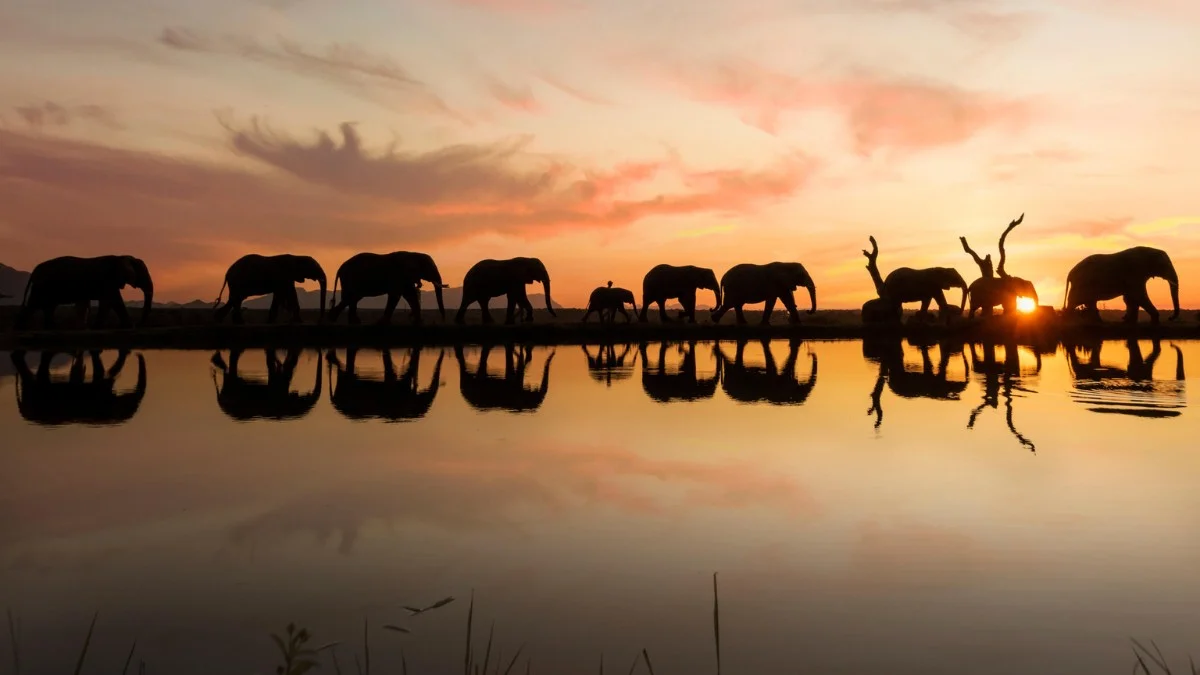
- Chobe holds Africa's largest elephant population; Moremi combines wetlands and woodlands in one reserve.
- Best months are May to October (dry season) for concentrated wildlife and easier game viewing.
- Accommodation tiers range from 4-star comfort ($675) to 5-star plus exclusivity ($900 and above per person nightly, all inclusive).
- Most camps operate fly-in access only, adding light aircraft transfers between reserves and limiting crowds.
Why choose Botswana for a honeymoon safari?
Botswana prioritises exclusivity over volume. The government caps lodge and camp sizes, restricts access to many reserves and enforces high park fees, which keeps visitor numbers low and wilderness pristine.
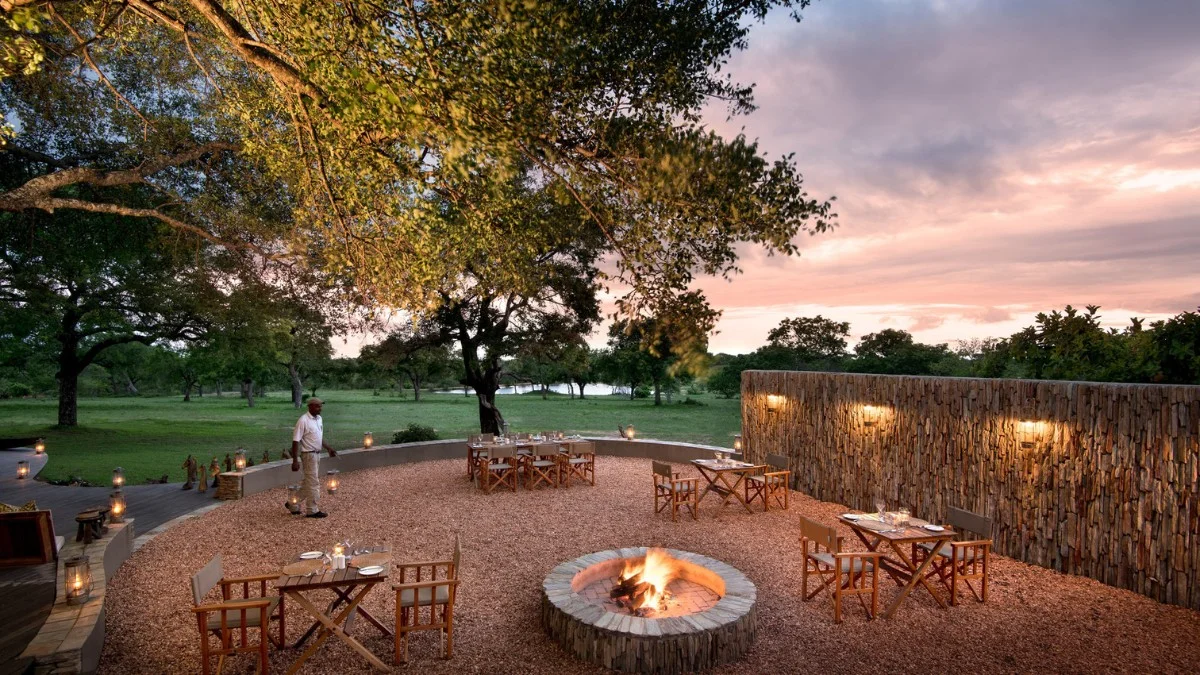
Couples experience private game drives, intimate camps with 6 to 12 rooms maximum and personalised service that adapts daily to your preferences.
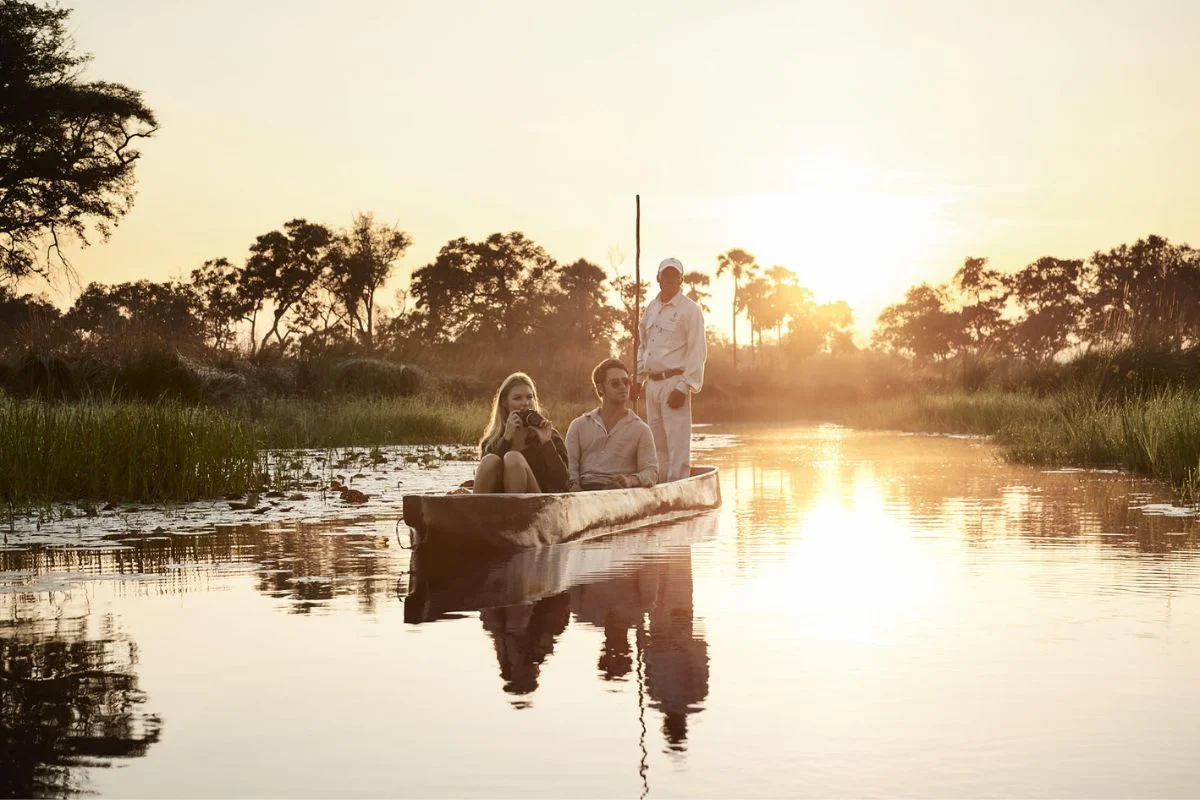
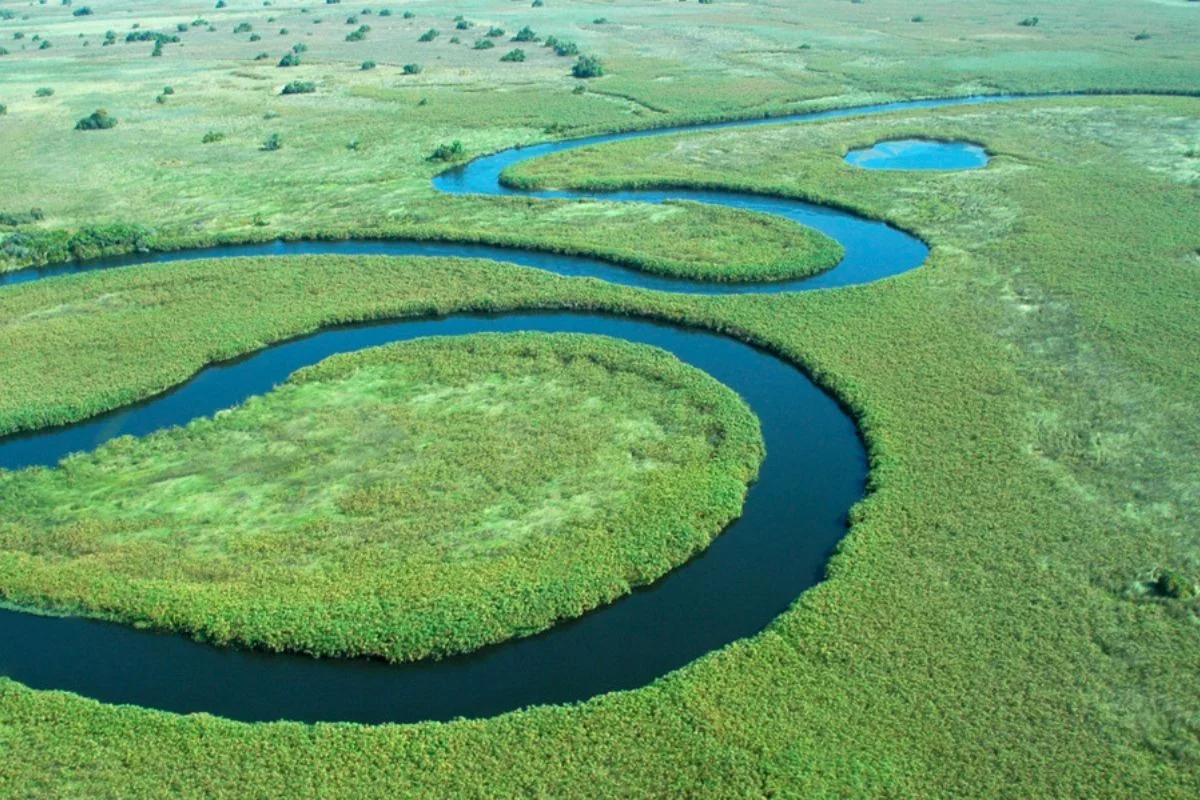
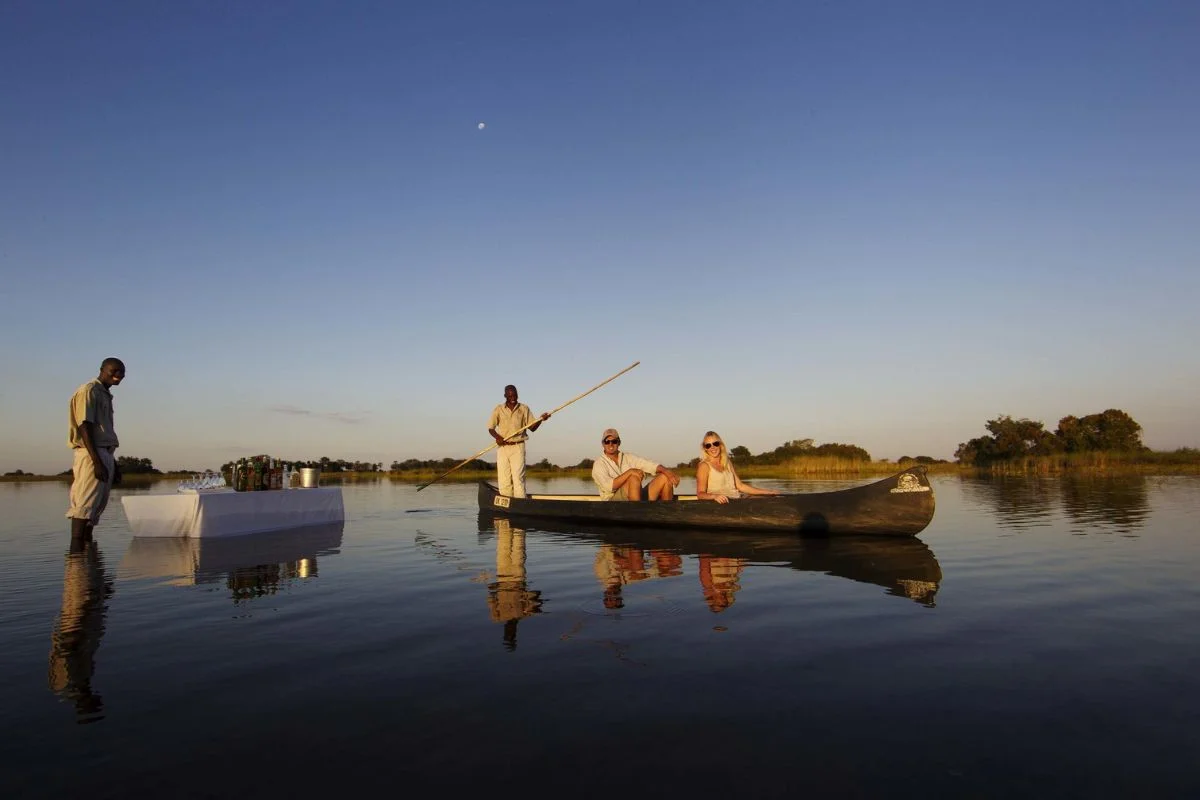
The Okavango Delta, a UNESCO World Heritage Site, provides the only permanent inland delta in the world and the only destination in Africa where you can glide through channels by traditional mokoro canoe alongside hippos and elephants.
Wildlife diversity rivals or exceeds East Africa. Botswana protects all Big Five (lion, leopard, elephant, buffalo, rhino), holds one of Africa's largest remaining populations of endangered African wild dogs and hosts over 600 bird species.
Large herds of elephants (Chobe alone supports 120,000), seasonal zebra migrations across the Makgadikgadi Pans and dense predator populations in Moremi deliver reliable sightings.
The country's stable governance, strong conservation record and low malaria risk in the dry season (May to October) add practical advantages for honeymooners.
What makes Botswana different from other African safari destinations?
Botswana's low volume, high cost model creates solitude and privacy that crowded parks elsewhere cannot match.
Most camps sit in private concessions where you can conduct off-road driving, night drives and walking safaris without competing vehicles.
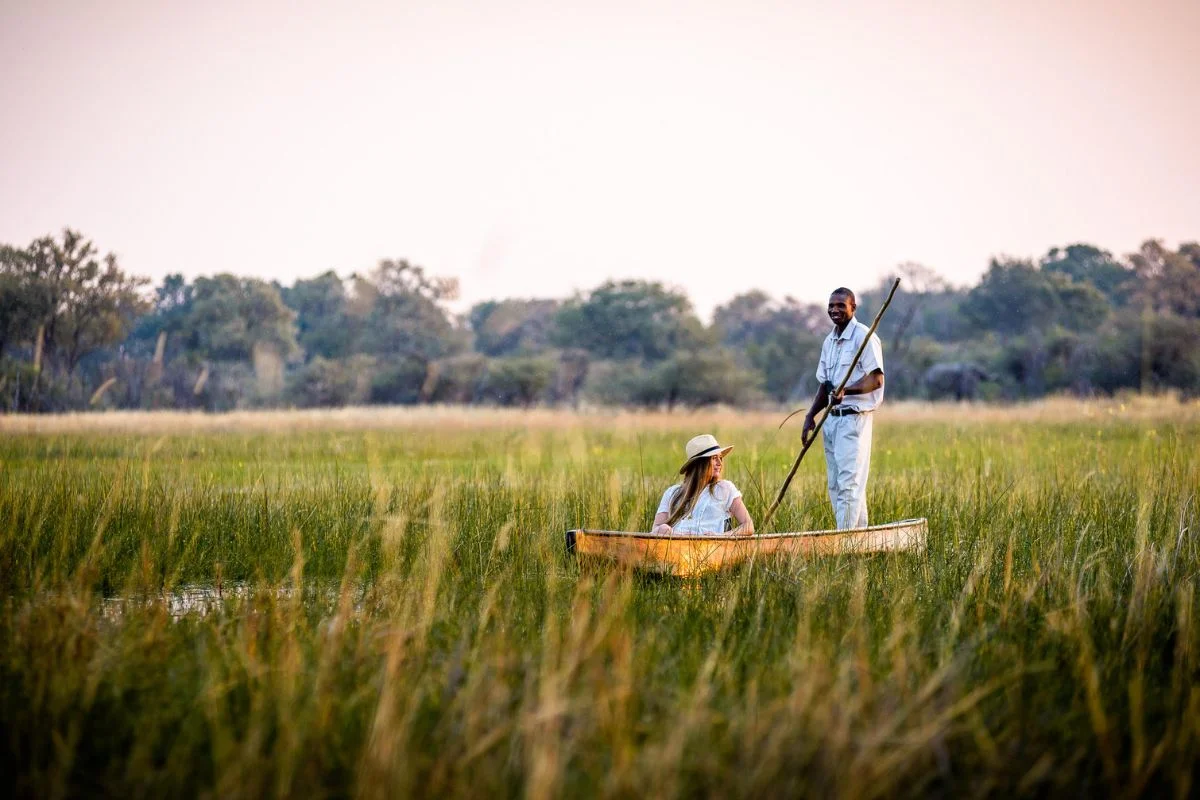
The Okavango Delta's water-based safaris (by mokoro, motorboat and sometimes swimming alongside elephants) offer experiences unavailable in Kenya, Tanzania or South Africa.
Botswana also bans hunting in national parks and enforces strict anti-poaching measures, resulting in habituated wildlife and close encounters on foot or by canoe.
Okavango Delta — best time to visit
| J | F | M | A | M | J | J | A | S | O | N | D | |
|---|---|---|---|---|---|---|---|---|---|---|---|---|
| High °C | 32° | 31° | 31° | 30° | 28° | 25° | 25° | 28° | 32° | 34° | 33° | 32° |
| High °F | 90° | 88° | 88° | 86° | 82° | 77° | 77° | 82° | 90° | 93° | 91° | 90° |
| Rain mm | 110 | 90 | 70 | 25 | 5 | 0 | 0 | 0 | 5 | 35 | 65 | 95 |
| Rating |
Okavango Delta: Floodwaters peak Jun–Aug — prime mokoro and game viewing; summer is hot and wet.
Ideal — Peak conditions — dry, comfortable, prime wildlife or beach time.
Good — Great conditions with brief showers or warmer days; still highly recommended.
Shoulder — Mixed weather — fewer crowds and lower rates, occasional rain.
Avoid — Heaviest rain or roughest seas; many camps and roads can be affected.
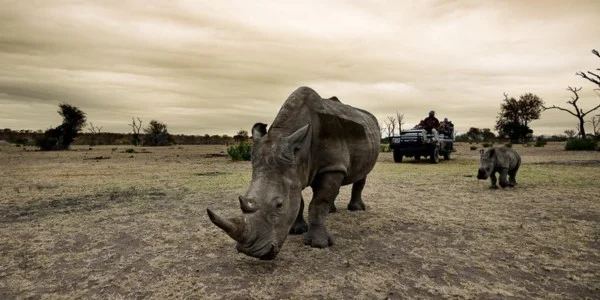
Top 5 destinations for a Botswana honeymoon
1. Okavango Delta
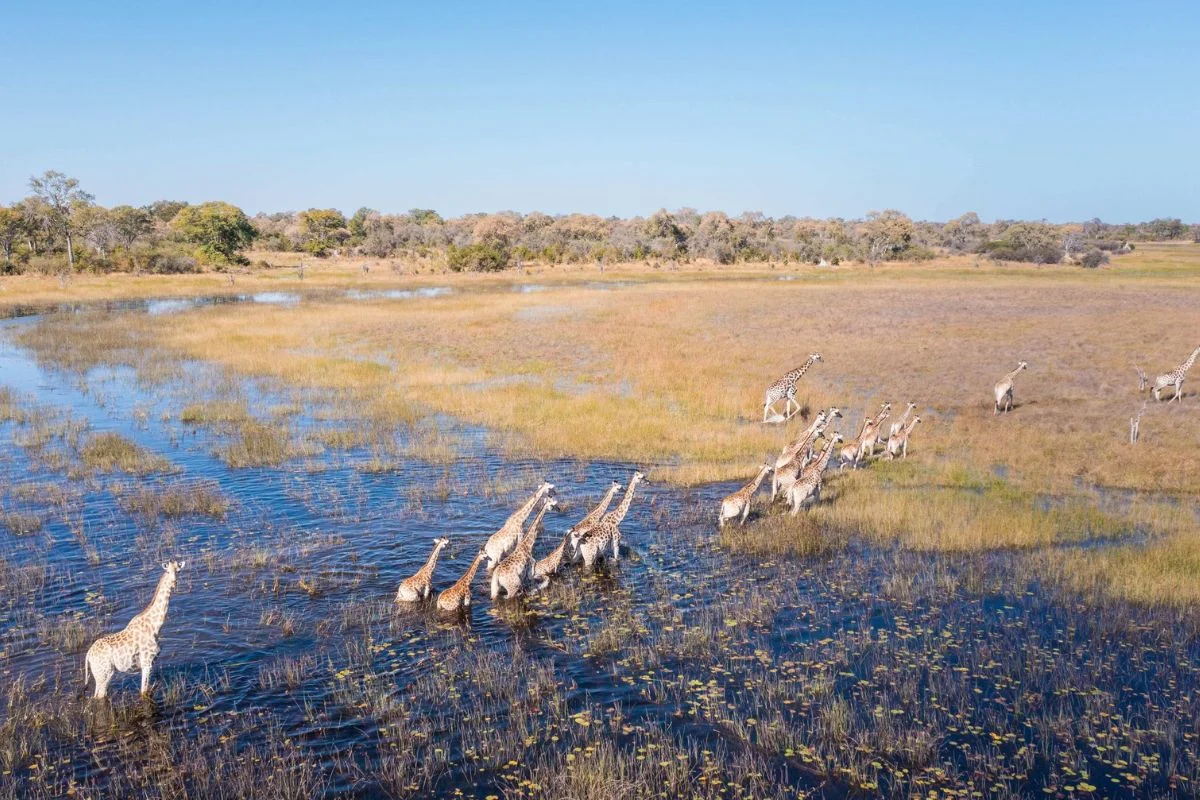
The Okavango Delta is a vast inland wetland that floods annually between March and August, creating a maze of channels, lagoons and islands.
Wildlife concentrates year-round because permanent water sources support hippos, crocodiles, elephants, buffalo, sitatunga antelope and over 400 bird species.
Couples travel by mokoro (a traditional dugout canoe poled by a guide) through narrow channels, walk on islands with armed guides to track wildlife on foot and combine water safaris with game drives on dry land.
The Delta's remoteness and fly-in access (most camps require light aircraft transfers) guarantee privacy.
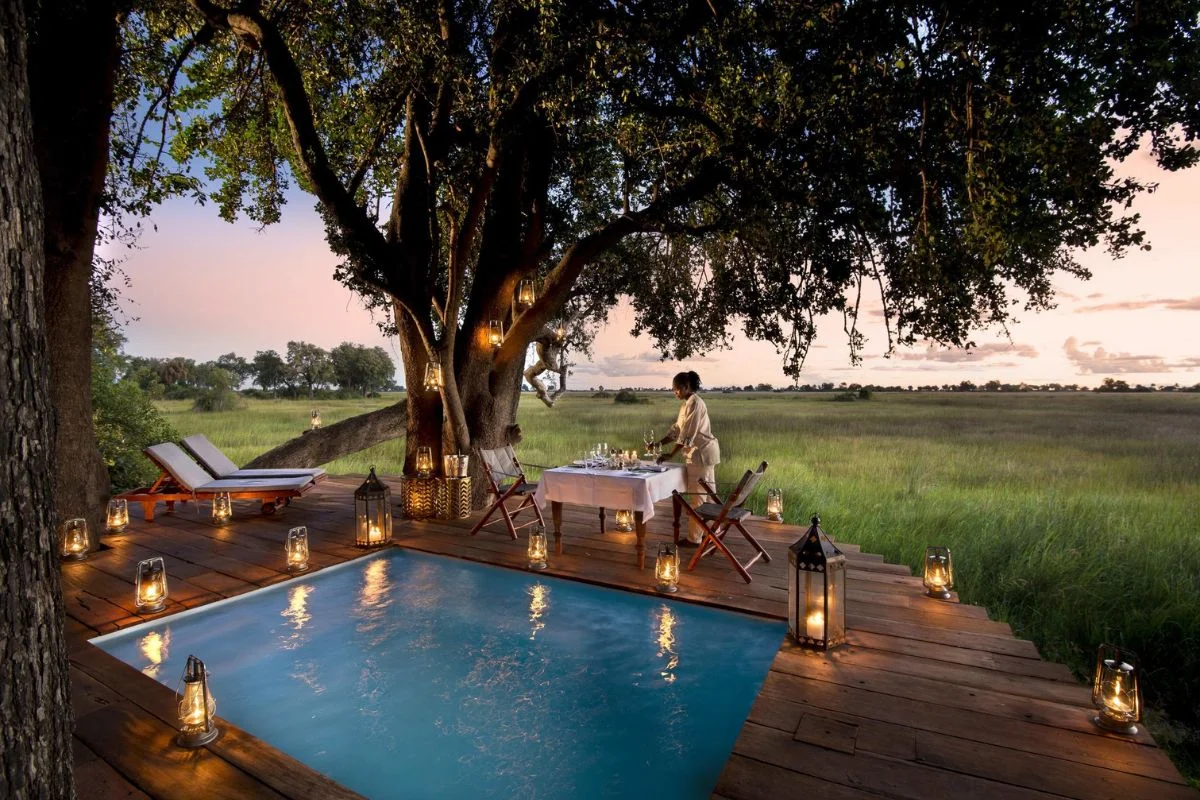
Accommodation ranges from classic 4-star tented camps ($675 to $800 per person nightly) to 5-star plus lodges with private plunge pools, outdoor showers and exclusive island settings ($900 to $1,500 per person).
All rates include meals, drinks, game activities and internal flights within the Delta. Peak season runs May to October when water levels remain high but vegetation thins for easier wildlife viewing.
The green season (November to April) offers lower rates, migratory birds and dramatic thunderstorms, though some camps close and mokoro safaris depend on water depth.
2. Chobe National Park
Chobe National Park holds Africa's highest elephant density, with herds of several hundred animals gathering along the Chobe River during the dry season (May to October).
The riverfront area between Kasane and Serondela offers sunset boat cruises where elephants wade through the shallows, buffalo drink in large numbers and crocodiles bask on sandbanks.
Lions and leopards patrol the floodplains, and the park protects one of southern Africa's last viable populations of puku antelope.
Chobe sits 80 kilometres from Victoria Falls, making it a popular combination for honeymooners who want waterfalls and wildlife in one itinerary. Lodges cluster along the river (ranging from 4-star river lodges at $700 per person to 5-star exclusive houseboats at $1,200) or occupy private concessions in the park's interior, where Savuti Marsh delivers dry-season predator action and the Linyanti wetlands offer water-based safaris similar to the Okavango Delta.
Most visitors combine a 2 to 3 night Chobe stay with the Delta or Moremi for habitat variety.
3. Moremi Game Reserve
Moremi Game Reserve occupies the eastern third of the Okavango Delta and combines permanent water (Chief's Island, Xakanaxa Lagoon) with dry-season floodplains and mopane woodlands.
The reserve holds exceptional leopard, wild dog and lion populations, plus large herds of buffalo, elephant and red lechwe antelope adapted to the wetlands.
Birdwatching rivals any site in Africa, with African fish eagles, malachite kingfishers, carmine bee-eaters and hundreds of waterbirds nesting along the channels.
Camps in Moremi offer the same mokoro and motorboat safaris as the broader Delta but add better game-drive access because the eastern sector has defined tracks and seasonal roads. This makes Moremi ideal for couples who want both water-based experiences and traditional game drives in one location.
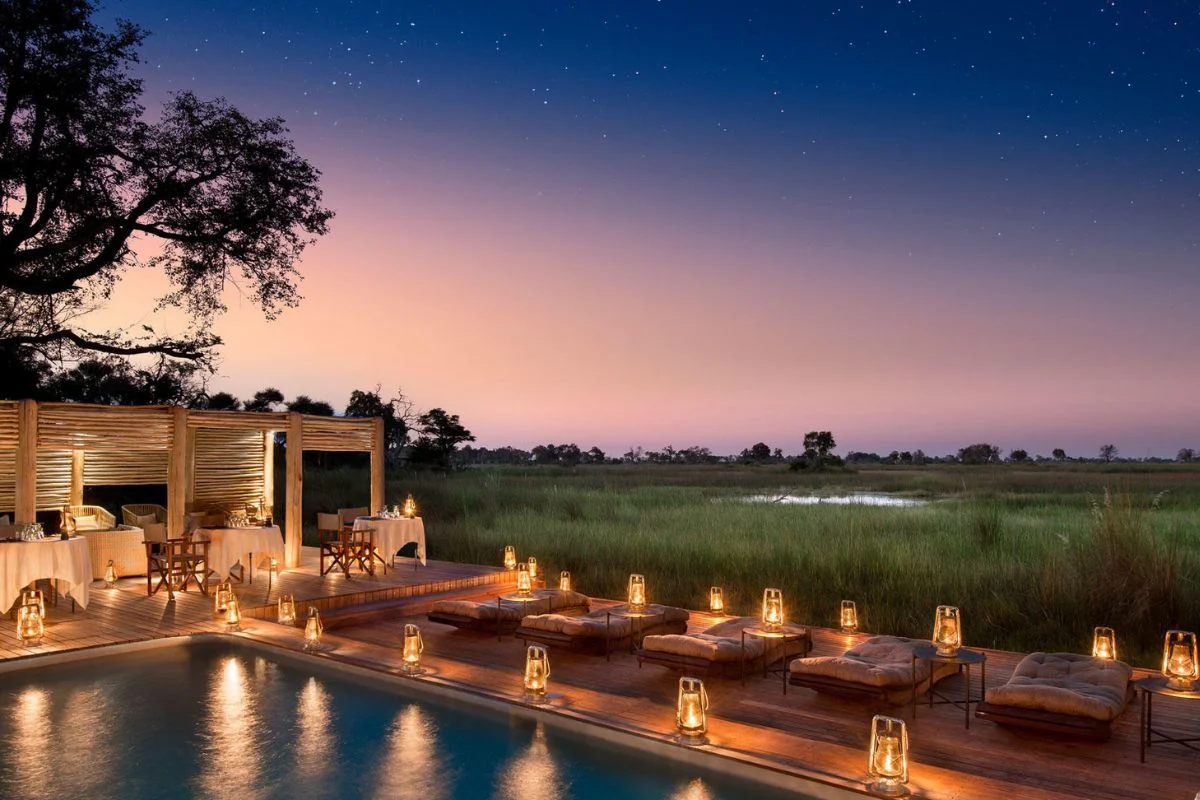
Accommodation spans classic mobile camps (4-star, $675 to $750 per person) to permanent 5-star plus lodges with private decks over lagoons ($900 to $1,400).
Dry season (May to October) concentrates wildlife around shrinking waterholes; wet season (December to March) brings calving, migratory birds and lush scenery but trickier road access.
Visit Cape Town
Visit the number one rated city in the world with 8 blue flag beaches, swimming with penguins and so much more
Plan My Safari4. Makgadikgadi Pans
The Makgadikgadi Pans are one of the world's largest salt flat systems, covering 12,000 square kilometres of stark white expanses. During the dry season (April to October), the pans lie empty and surreal, ideal for quad biking, guided walks with Kalahari bushmen and stargazing under skies free of light pollution.
The wet season (November to March) transforms the pans into shallow lakes that attract tens of thousands of flamingos and one of Africa's last great zebra migrations, when 25,000 zebras trek from the Boteti River to the fresh grazing.
Camps on the pans offer a different safari rhythm: fewer Big Five sightings (though lions follow the zebra migration and brown hyenas patrol year-round), more cultural interaction with local San communities and dramatic open landscapes.
Rates run $600 to $900 per person nightly (4-star to 5-star), and most itineraries pair the pans with the Okavango Delta or Chobe for wildlife diversity. Best months are January to March for the zebra migration and flamingos, or June to August for quad biking and cultural experiences.
5. Central Kalahari Game Reserve
The Central Kalahari Game Reserve is one of Africa's largest protected areas (52,800 square kilometres) and one of its most remote.
Golden grasslands, acacia woodlands and seasonal pans support black-maned Kalahari lions, cheetahs, brown hyenas, springbok, gemsbok and eland.
The reserve receives few visitors (access requires a 4x4 and experienced guide, or a fly-in charter to remote airstrips), guaranteeing solitude and raw wilderness.
Camps in the Kalahari cater to adventurous honeymooners who value seclusion over Big Five density. Expect mobile tented camps (4-star, $650 to $800 per person) or small permanent lodges (5-star, $900 to $1,200) with walking safaris, night drives and San cultural visits. Best months are December to April when summer rains green the grasslands and herbivores calve, drawing predators.
The dry season (May to October) offers cooler temperatures and easier wildlife tracking but limited water sources and less game density than the Delta or Chobe.
Can you combine multiple destinations in one Botswana honeymoon?
Most itineraries combine two or three regions over 7 to 12 nights: a typical route pairs the Okavango Delta (3 to 4 nights) with Chobe (2 to 3 nights) and optionally Victoria Falls (2 nights in Zimbabwe or Zambia). Another popular combination links Moremi (3 nights) with the Makgadikgadi Pans (2 nights) and the Central Kalahari (2 nights). Light aircraft transfers between camps (included in most all-inclusive rates or charged separately at $200 to $400 per person per leg) make multi-stop itineraries logistically simple, though each transfer shortens your time on the ground.
Wildlife you will encounter
Botswana protects over 160 mammal species and 600 bird species across its parks and reserves. The Big Five (lion, leopard, elephant, buffalo, rhino) are all present, though rhinos concentrate in protected sanctuaries within Moremi and the Okavango due to historical poaching pressures.
Chobe and the northern Okavango hold the world's largest remaining elephant population (an estimated 130,000 animals), with herds of 100 to 300 individuals common along rivers during the dry season.
Predator diversity stands out. The Okavango Delta and Moremi support one of Africa's highest leopard densities, with sightings almost daily at top camps.
African wild dogs (fewer than 7,000 remain continentwide) roam Moremi, Chobe and the private concessions in stable packs of 10 to 20 adults.
Cheetahs prefer open grasslands in the Central Kalahari and the drier eastern Chobe, while spotted hyenas, brown hyenas (in the Kalahari) and side-striped jackals fill scavenger niches.
Lions occur throughout, with the Kalahari subspecies known for their distinctive black manes.
What are the best months for wildlife viewing in Botswana?
The dry season (May to October) concentrates wildlife around permanent water sources (rivers, lagoons, Delta channels), making game viewing easier and more predictable. Vegetation dies back, sightlines open and animals congregate in large numbers at reliable waterholes.
This period also brings cooler daytime temperatures (25 to 30°C), minimal rain and the lowest malaria risk. The wet season (November to April) disperses wildlife across the landscape as ephemeral pans fill, but delivers calving season (December to February), migratory bird arrivals, lush green scenery and lower lodge rates (often 20 to 30 per cent discounts).
Some remote camps close December to March due to impassable roads.
Accommodation options and pricing
Botswana's lodges and camps operate on an all-inclusive model: nightly rates cover accommodation, all meals, local drinks (wine, beer, spirits), twice-daily game activities (drives, walks, boat or mokoro safaris) and sometimes internal light aircraft transfers within a region.
International flights, premium imported spirits, spa treatments and tips are excluded. Accommodation splits into three tiers.
Four-star properties ($675 to $850 per person nightly) offer comfortable tented camps or chalets with en-suite bathrooms, ceiling fans or air conditioning, communal dining and twice-daily game drives.
These camps maintain high standards but lack private plunge pools, 24-hour butler service or ultra-remote locations. Examples include seasonal mobile camps in Moremi and classic tented lodges in Chobe.
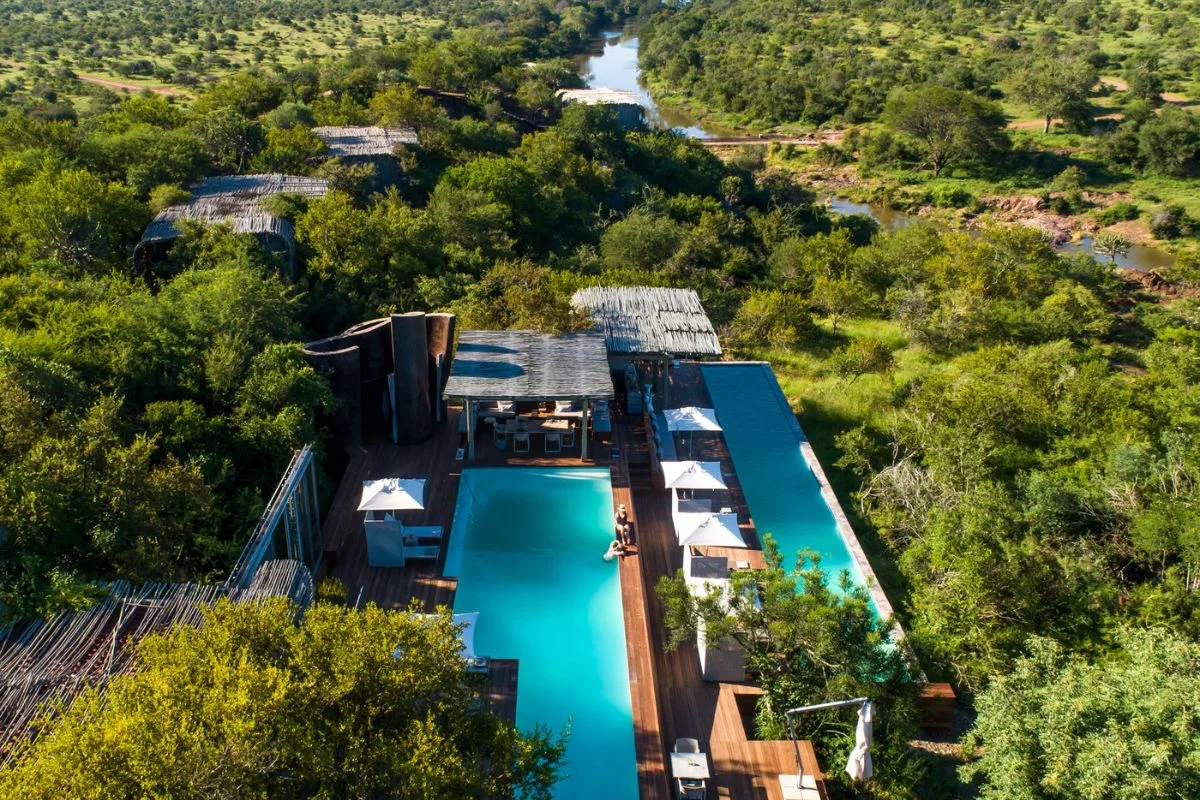
Five-star lodges (900 to $1,200 per person) add private decks, outdoor showers, plunge pools, room service and more flexible activity schedules. Camps often sit in exclusive concessions with off-road driving and walking safaris.
Five-star plus properties ($1,200 to $2,000 per person) occupy the most remote islands in the Okavango Delta or private reserves along the Chobe, with 4 to 8 rooms maximum, personal guides, private vehicles and bespoke itineraries (sleep-outs under the stars, helicopter transfers, private mokoro excursions).
Seychelles Island Escape
Visit the jewel of the Indian Ocean with blue azure waters and white sandy beaches.
Plan My SafariBest time to visit for a honeymoon
May to October (dry season) delivers the most reliable weather and wildlife viewing. Skies stay clear, daytime temperatures range 25 to 30°C, nights cool to 5 to 15°C and rain is rare. Wildlife concentrates predictably, and all camps operate.
This is peak season: book 6 to 12 months ahead and expect full rates. Within this window, May and June offer the best value (sometimes 10 to 15 per cent lower than July to September), good game and the tail end of the Delta flood.
July to September bring the highest wildlife density, coolest mornings (ideal for walking safaris) and peak occupancy. October heats up (32 to 35°C) but remains excellent for predators as prey clusters around shrinking water sources.
November to April (green season) suits budget-conscious honeymooners and birders. Rates drop 20 to 40 per cent, camps are quieter and the landscape greens dramatically.
Migratory birds arrive (November to March), zebras calve and predators follow the young. The trade-off: afternoon thunderstorms, higher humidity, dispersed game and some camps closed.
The Okavango Delta flood peaks March to June (fed by rains in the Angolan highlands 1,000 kilometres upstream), so mokoro safaris remain excellent even in the wet season, though getting to remote islands may require helicopter transfers if roads flood.
Chobe — best time to visit
| J | F | M | A | M | J | J | A | S | O | N | D | |
|---|---|---|---|---|---|---|---|---|---|---|---|---|
| High °C | 32° | 31° | 31° | 30° | 28° | 26° | 26° | 29° | 33° | 35° | 34° | 33° |
| High °F | 90° | 88° | 88° | 86° | 82° | 79° | 79° | 84° | 91° | 95° | 93° | 91° |
| Rain mm | 95 | 80 | 60 | 20 | 5 | 0 | 0 | 0 | 5 | 30 | 60 | 85 |
| Rating |
Chobe: Dry winter (May–Oct) concentrates elephants on the river; Oct is hot.
Ideal — Peak conditions — dry, comfortable, prime wildlife or beach time.
Good — Great conditions with brief showers or warmer days; still highly recommended.
Shoulder — Mixed weather — fewer crowds and lower rates, occasional rain.
Avoid — Heaviest rain or roughest seas; many camps and roads can be affected.
What to pack for a Botswana honeymoon safari
Light aircraft transfers impose strict luggage limits: 20 kilograms per person in soft-sided bags (no hard-shell suitcases).
Pack neutral-coloured clothing (khaki, olive, beige) for game drives, a warm fleece or jacket for early morning and evening activities (May to August), a wide-brimmed hat, sunglasses, sunscreen (SPF 30 or higher) and insect repellent (DEET-based).
Bring binoculars (8x42 or 10x42), a camera with a telephoto lens (200 to 400 millimetres ideal) and extra batteries or a portable charger (most camps have limited charging hours).
Casual comfortable clothing suffices for dinners; Botswana camps maintain relaxed dress codes. Add a swimsuit (many lodges have pools), a headlamp or torch and any prescription medications in original packaging.
Last updated: September 2026