
10 Best Lion Safari Destinations in Africa for 2026 / 2027
In this article we take a look at the best places in Africa to see the King, the mighty lion, let's jump in...

If you want to see lions on safari, these 10 African parks offer the highest densities, best viewing conditions, and most reliable sightings.
The best lion safari destinations in Africa are Maasai Mara (Kenya), Serengeti (Tanzania), Kruger (South Africa), Ngorongoro Crater (Tanzania), and South Luangwa (Zambia). Visit during dry seasons (May to October) when lions concentrate around water sources. Most parks also host the Big Five. Expect lodges from mid-range to luxury tiers.
Key takeaways
Maasai Mara and Serengeti host the Great Migration (July to October), attracting large lion prides and prey.
Kruger National Park offers the widest range of budgets and over 1,600 lions across varied ecosystems.
Ngorongoro Crater's 25-kilometre caldera supports one of Africa's densest lion populations in a compact area.
Okavango Delta lions hunt in water, a behaviour unique to the region's seasonal flood cycles.
Kgalagadi lions are larger than average, with males displaying distinctive black manes adapted to the arid climate.
Best overall viewing is May to October across most parks, when dry conditions push wildlife to waterholes.
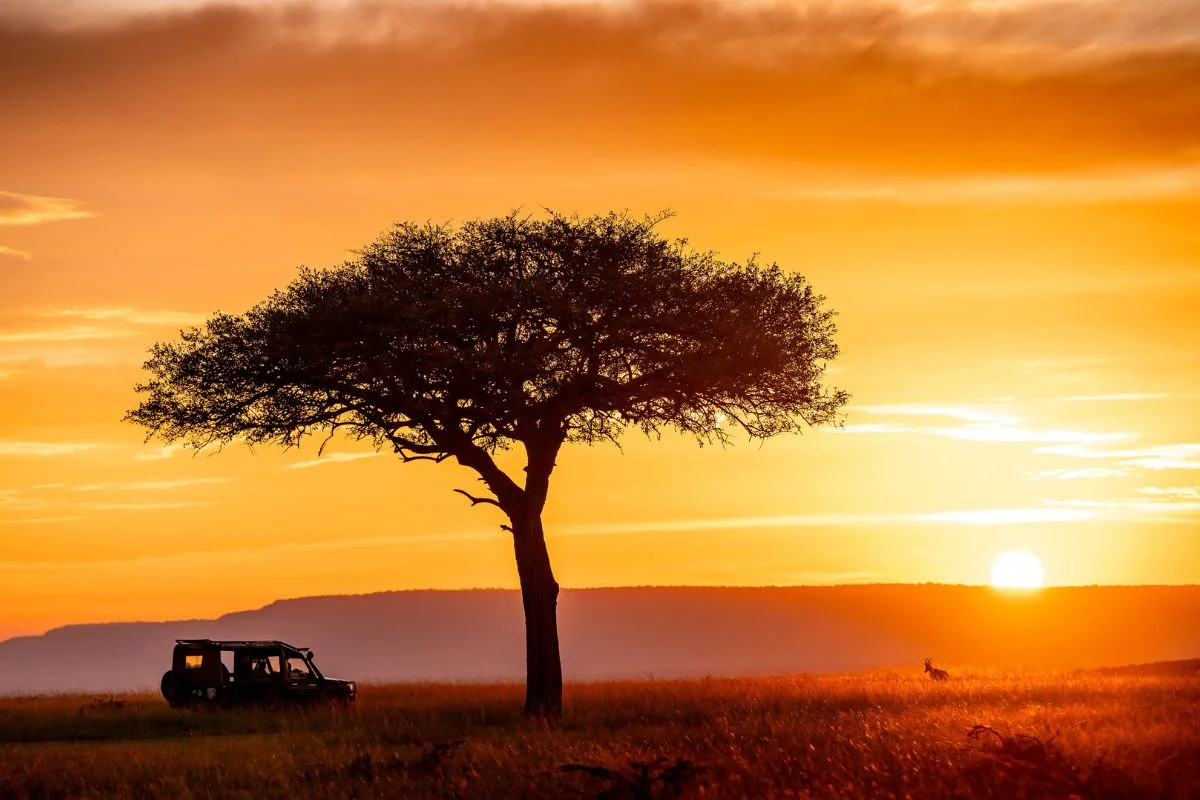
1. Maasai Mara National Reserve, Kenya
Maasai Mara is Kenya's premier lion destination. The reserve covers 1,510 square kilometres of open savannah and supports year-round lion populations. Between July and October, the Great Migration brings over 1.5 million wildebeest and 200,000 zebra into the Mara, creating exceptional predator viewing as resident lion prides hunt migrating herds.
The reserve's ecosystem supports all Big Five species (lion, leopard, elephant, rhino, buffalo). Lion sightings are near-guaranteed during guided game drives, which run morning and late afternoon. Hot air balloon safaris launch at dawn and offer aerial views of the plains and predator activity below.
Most lodges and camps sit in private conservancies bordering the reserve, where walking safaris and night drives are permitted. The Maasai people live in the surrounding areas and offer cultural visits as part of many safari itineraries.
When is the best time to see lions in Maasai Mara?
July to October is peak season. The migration draws massive prey concentrations, and lions follow. River crossings at the Mara River create dramatic hunting opportunities. Outside migration months, resident prides remain active, but sightings require more tracking. January to March is calving season for wildebeest in the southern Serengeti, which also draws predators, though most activity occurs in Tanzania during these months.
Masai Mara — best time to visit
| J | F | M | A | M | J | J | A | S | O | N | D | |
|---|---|---|---|---|---|---|---|---|---|---|---|---|
| High °C | 28° | 29° | 29° | 26° | 25° | 24° | 24° | 25° | 27° | 28° | 26° | 27° |
| High °F | 82° | 84° | 84° | 79° | 77° | 75° | 75° | 77° | 81° | 82° | 79° | 81° |
| Rain mm | 60 | 60 | 100 | 200 | 145 | 35 | 30 | 50 | 45 | 65 | 115 | 85 |
| Rating |
Masai Mara: Great Migration peaks Jul–Oct; long rains Mar–May, short rains Nov.
Ideal — Peak conditions — dry, comfortable, prime wildlife or beach time.
Good — Great conditions with brief showers or warmer days; still highly recommended.
Shoulder — Mixed weather — fewer crowds and lower rates, occasional rain.
Avoid — Heaviest rain or roughest seas; many camps and roads can be affected.
Seychelles Island Escape
Visit the jewel of the Indian Ocean with blue azure waters and white sandy beaches.
Plan My Safari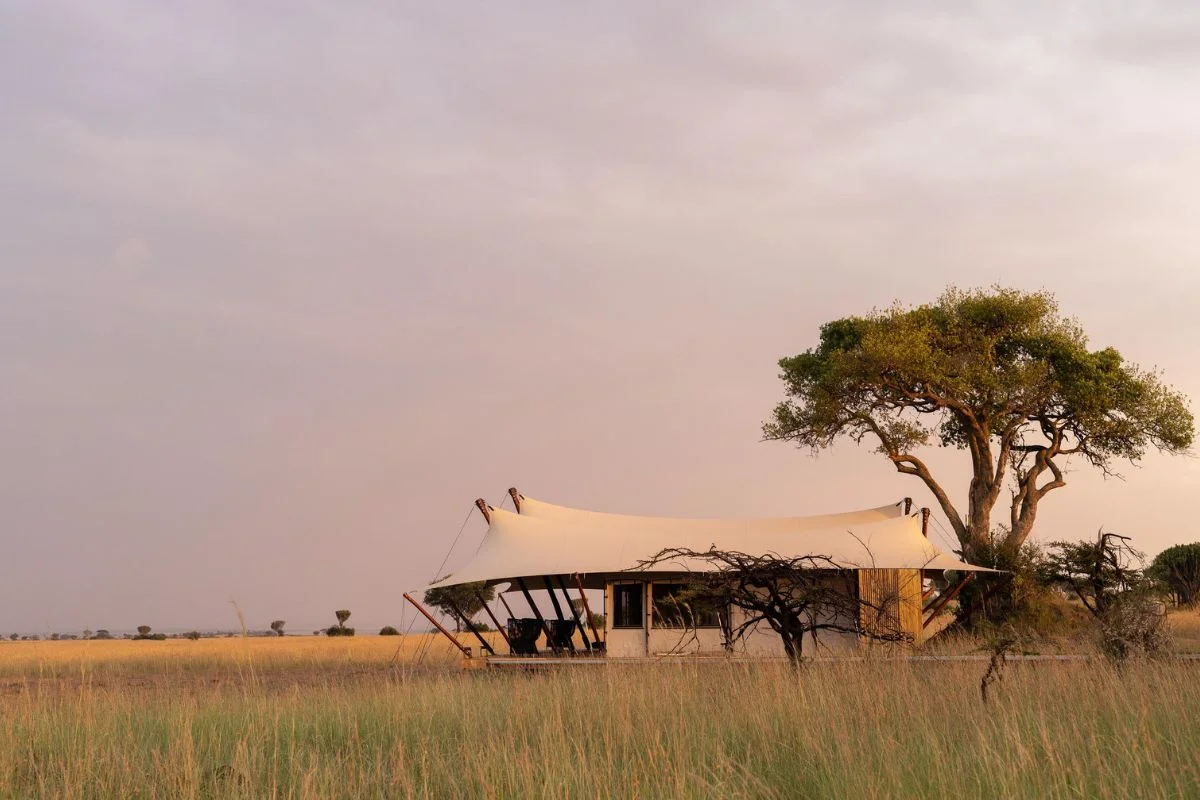
2. Serengeti National Park, Tanzania
Serengeti National Park is home to over 3,000 lions, one of the highest densities in Africa. The park spans 14,763 square kilometres and includes multiple ecosystems, from short-grass plains in the south to riverine woodlands in the north. Lions are present year-round, but the best viewing coincides with the wildebeest migration cycle.
December to June sees the migration in the southern and central Serengeti. Calving occurs in February and March, when hundreds of thousands of wildebeest give birth on the short-grass plains. This attracts lions, cheetahs, and hyenas in large numbers. The northern Serengeti and Mara River crossings peak July to September as herds move into Kenya.
Game drives are the primary activity. Mobile tented camps follow the migration, while permanent lodges offer year-round access to resident prides. The Seronera Valley in central Serengeti is particularly reliable for lion sightings outside migration months.
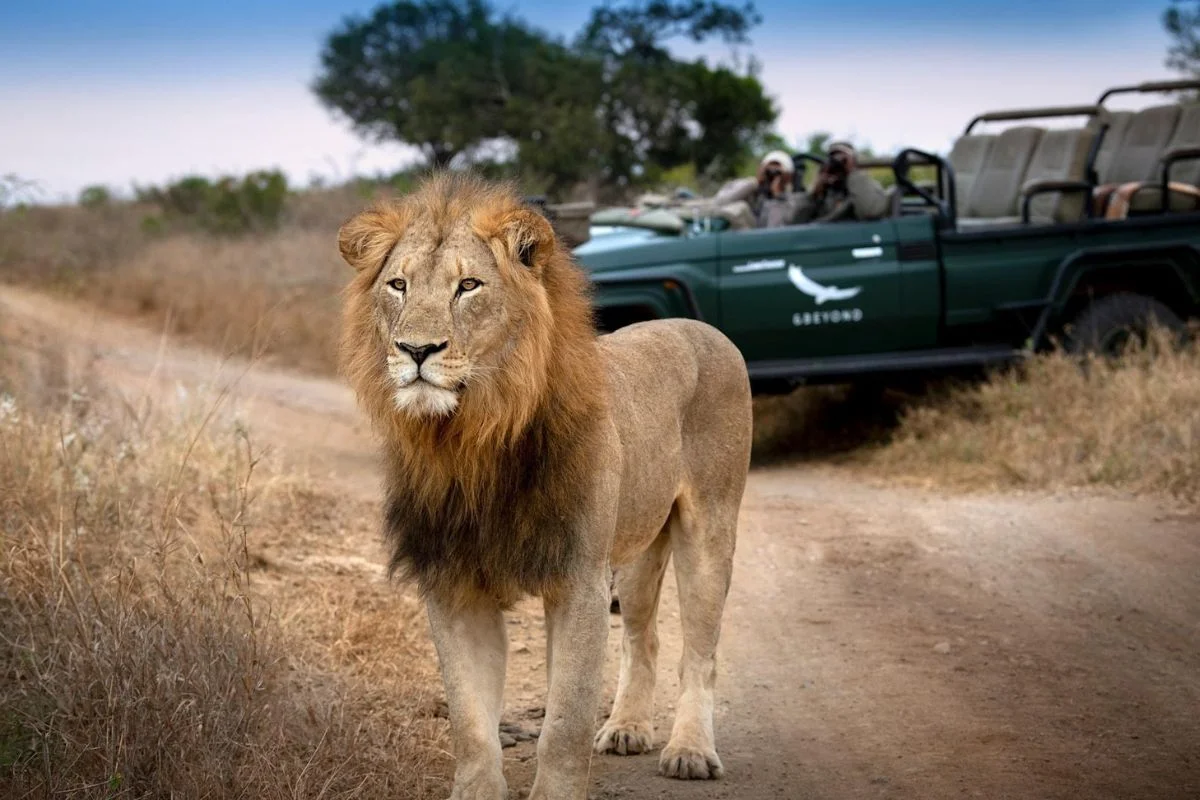
3. Kruger National Park, South Africa
Kruger National Park is South Africa's largest reserve at 19,485 square kilometres. It hosts approximately 1,600 lions across diverse habitats, including thornveld, riverine forest, and mopane woodlands. The park's size and accessibility make it suitable for self-drive safaris and guided tours alike.
The dry season (May to September) concentrates wildlife around permanent water sources, improving lion sighting odds.
The Sabi Sands and Timbavati private reserves share unfenced borders with Kruger and permit off-road tracking and night drives, which increase close-encounter opportunities.
Kruger offers the full range of Big Five sightings, plus over 500 bird species. Accommodation ranges from rest camps with self-catering units (starting around $40 per night) to exclusive safari lodges (from $400 to over $1,500 per person per night, all-inclusive).
Many lodges offer honeymoon-specific packages.
How does Kruger compare to East African parks for lion viewing?
Kruger's lions are spread across a larger area than Maasai Mara or Serengeti, so sightings can require more patience. However, the park's road network and private reserve partnerships offer flexibility.
East African parks concentrate lions around migration routes and seasonal prey movements, producing more predictable sightings during peak months. Kruger's advantage is year-round access, varied accommodation tiers, and the option to self-drive, which lowers costs.
Kruger / Sabi Sand — best time to visit
| J | F | M | A | M | J | J | A | S | O | N | D | |
|---|---|---|---|---|---|---|---|---|---|---|---|---|
| High °C | 32° | 31° | 30° | 28° | 26° | 24° | 24° | 26° | 28° | 29° | 30° | 31° |
| High °F | 90° | 88° | 86° | 82° | 79° | 75° | 75° | 79° | 82° | 84° | 86° | 88° |
| Rain mm | 110 | 95 | 75 | 35 | 15 | 10 | 5 | 10 | 25 | 55 | 85 | 105 |
| Rating |
Kruger / Sabi Sand: Dry winter (May–Sep) gives the best game viewing; summer is lush but wet.
Ideal — Peak conditions — dry, comfortable, prime wildlife or beach time.
Good — Great conditions with brief showers or warmer days; still highly recommended.
Shoulder — Mixed weather — fewer crowds and lower rates, occasional rain.
Avoid — Heaviest rain or roughest seas; many camps and roads can be affected.
4. Ngorongoro Crater, Tanzania
Ngorongoro Crater is a 260-square-kilometre volcanic caldera and a UNESCO World Heritage Site. The crater floor supports around 60 lions in several prides, alongside buffalo, black rhino, elephant, and dense populations of wildebeest and zebra. The enclosed ecosystem creates high predator-prey densities in a compact area.
Game drives descend 600 metres to the crater floor. Lions are often visible near Lake Magadi and the central grasslands. The best viewing is June to October, the dry season, when animals gather around the crater's permanent water sources. The crater's altitude (2,200 metres at the rim) means cooler temperatures than lowland parks.
Most visitors combine Ngorongoro with Serengeti (a three-hour drive) and the archaeological site of Olduvai Gorge, 50 kilometres west of the crater. Lodges sit on the crater rim, offering views into the caldera at sunrise.
5. South Luangwa National Park, Zambia
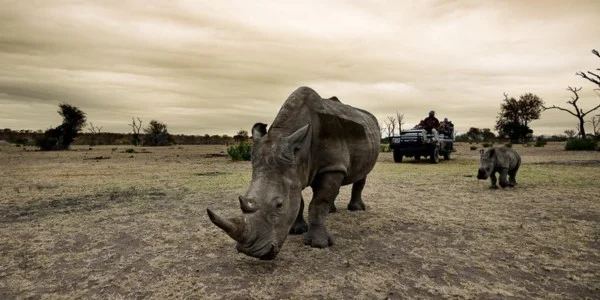
South Luangwa National Park is Zambia's premier wildlife destination and a specialist park for walking safaris. The park covers 9,050 square kilometres along the Luangwa River and supports healthy lion populations, though exact numbers fluctuate. The park's isolation (no fences, minimal development) preserves a wild character.
Dry season (May to October) is the main safari window. The Luangwa River becomes a series of lagoons and waterholes, drawing game to predictable locations. Lions hunt leopards, elephants, and the endemic Thornicroft's giraffe during this period. Walking safaris, led by licensed guides, allow close observation of tracks, scat, and hunting behaviour.
The park receives fewer visitors than Kruger or Serengeti, so sightings feel more private. Lodges are small and typically all-inclusive, ranging from $300 to $800 per person per night.
6. Okavango Delta, Botswana
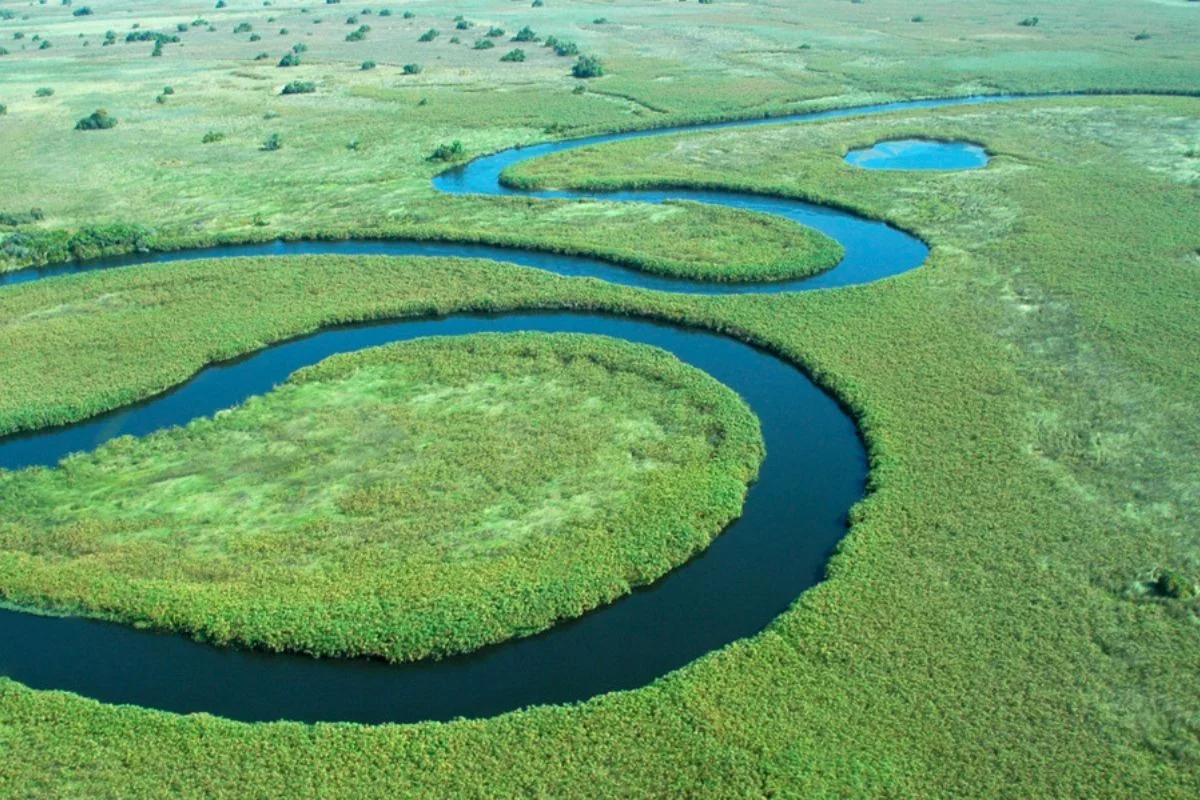
The Okavango Delta is a 15,000-square-kilometre inland delta that floods annually between June and August, peaking in July and August. Lions in the delta have adapted to hunt in shallow water, pursuing species like lechwe and sitatunga that wade through channels. This behaviour is unique among African lion populations.
Game drives and mokoro (dugout canoe) trips are the primary activities. Private concessions such as Moremi Game Reserve and Khwai Community Area offer off-road driving and walking safaris. The delta hosts all Big Five species, though rhino are rare.
Lodges in the delta are typically high-end, ranging from $600 to over $2,000 per person per night, all-inclusive. The delta's seasonal flood creates distinct wet and dry season experiences, both viable for lion viewing.
Okavango Delta — best time to visit
| J | F | M | A | M | J | J | A | S | O | N | D | |
|---|---|---|---|---|---|---|---|---|---|---|---|---|
| High °C | 32° | 31° | 31° | 30° | 28° | 25° | 25° | 28° | 32° | 34° | 33° | 32° |
| High °F | 90° | 88° | 88° | 86° | 82° | 77° | 77° | 82° | 90° | 93° | 91° | 90° |
| Rain mm | 110 | 90 | 70 | 25 | 5 | 0 | 0 | 0 | 5 | 35 | 65 | 95 |
| Rating |
Okavango Delta: Floodwaters peak Jun–Aug — prime mokoro and game viewing; summer is hot and wet.
Ideal — Peak conditions — dry, comfortable, prime wildlife or beach time.
Good — Great conditions with brief showers or warmer days; still highly recommended.
Shoulder — Mixed weather — fewer crowds and lower rates, occasional rain.
Avoid — Heaviest rain or roughest seas; many camps and roads can be affected.
7. Kgalagadi Transfrontier Park, South Africa and Botswana
Kgalagadi Transfrontier Park straddles the South Africa and Botswana border and covers 38,000 square kilometres of semi-arid Kalahari savannah. The park's Kalahari lions are known for larger body size and black manes, adaptations to the arid environment. Males can exceed 225 kilograms.
The park's dry riverbeds (Nossob and Auob) concentrate game along predictable routes. Lions, cheetahs, and leopards follow antelope (gemsbok, springbok, eland) along these corridors. April to October offers cooler temperatures and better game viewing, though summer (November to March) sees rare rains and temporary green-up that attracts migratory species.
Kgalagadi is accessible by 2WD on main roads, and rest camps (Twee Rivieren, Nossob, Mata Mata) offer self-catering chalets from around $60 per night. Wilderness camps provide a more remote experience. The park's night sky is exceptional for stargazing due to minimal light pollution.
What makes Kgalagadi lions distinctive?
Kgalagadi lions are adapted to low water availability and hunt larger prey (gemsbok can weigh 240 kilograms) in open, sparse terrain. Males develop thicker, darker manes, possibly as a signal of fitness in harsh conditions. The park's open landscapes allow long-distance visibility, so lion sightings often involve extended stalking sequences visible from roads. This contrasts with bushy or forested parks where lions disappear quickly into cover.
8. Etosha National Park, Namibia
Etosha National Park in northern Namibia covers 22,270 square kilometres, centred on the Etosha Pan, a 4,800-square-kilometre salt flat visible from space. The park's waterholes are its defining feature. During dry months (May to October), lions, elephants, rhinos, and antelope gather at these permanent water sources, often within metres of each other.
Etosha's rest camps (Okaukuejo, Halali, Namutoni) feature floodlit waterholes, allowing night viewing from benches beside the camp fence. Lions frequently visit after dark. The park is self-drive-friendly, with well-maintained gravel roads linking waterholes.
Accommodation ranges from campsites (around $30 per pitch) to mid-range bungalows and luxury lodges outside the park gates. Etosha combines easily with Damaraland and Skeleton Coast itineraries in Namibia's northwest.
Etosha — best time to visit
| J | F | M | A | M | J | J | A | S | O | N | D | |
|---|---|---|---|---|---|---|---|---|---|---|---|---|
| High °C | 33° | 32° | 31° | 30° | 28° | 25° | 25° | 28° | 32° | 34° | 34° | 33° |
| High °F | 91° | 90° | 88° | 86° | 82° | 77° | 77° | 82° | 90° | 93° | 93° | 91° |
| Rain mm | 75 | 80 | 75 | 30 | 5 | 0 | 0 | 0 | 5 | 20 | 45 | 70 |
| Rating |
Etosha: Dry season (May–Oct) brings game to the waterholes; rains transform the pan Dec–Mar.
Ideal — Peak conditions — dry, comfortable, prime wildlife or beach time.
Good — Great conditions with brief showers or warmer days; still highly recommended.
Shoulder — Mixed weather — fewer crowds and lower rates, occasional rain.
Avoid — Heaviest rain or roughest seas; many camps and roads can be affected.
Visit Cape Town
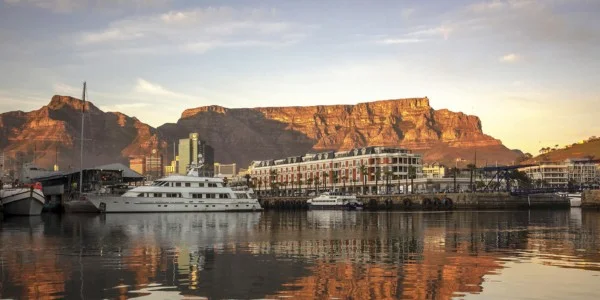
Visit the number one rated city in the world with 8 blue flag beaches, swimming with penguins and so much more
Plan My Safari9. Hwange National Park, Zimbabwe
Hwange National Park is Zimbabwe's largest park at 14,651 square kilometres. It supports over 500 lions and more than 100 mammal species, including one of Africa's largest elephant populations (around 45,000). The park's diverse habitats (teak and mopane woodlands, grasslands, pans) sustain year-round game.
Dry season (June to October) is optimal. Hwange's artificial waterholes, pumped year-round, draw lions, wild dogs, cheetahs, and buffalo. The park's remoteness and lower visitor numbers compared to Kruger or Serengeti create a more exclusive feel.
Hwange sits near Victoria Falls (two-hour drive), making it a natural extension to falls-focused itineraries. Lodges range from tented camps to permanent structures, mostly all-inclusive, from $250 to $700 per person per night.
Hwange — best time to visit
| J | F | M | A | M | J | J | A | S | O | N | D | |
|---|---|---|---|---|---|---|---|---|---|---|---|---|
| High °C | 30° | 29° | 29° | 28° | 25° | 23° | 23° | 26° | 31° | 33° | 32° | 30° |
| High °F | 86° | 84° | 84° | 82° | 77° | 73° | 73° | 79° | 88° | 91° | 90° | 86° |
| Rain mm | 145 | 125 | 75 | 25 | 5 | 0 | 0 | 0 | 5 | 30 | 90 | 140 |
| Rating |
Hwange: Dry-season game viewing Jul–Oct is exceptional as wildlife concentrates at pumped waterholes.
Ideal — Peak conditions — dry, comfortable, prime wildlife or beach time.
Good — Great conditions with brief showers or warmer days; still highly recommended.
Shoulder — Mixed weather — fewer crowds and lower rates, occasional rain.
Avoid — Heaviest rain or roughest seas; many camps and roads can be affected.
10. Selous Game Reserve (Nyerere National Park), Tanzania
Selous Game Reserve (recently renamed Nyerere National Park for the northern section) is one of Africa's largest protected areas at 50,000 square kilometres. Its remote location in southern Tanzania and low lodge density make it one of the continent's wildest lion safari destinations. The Rufiji River and its tributaries attract game year-round.
Boat safaris on the Rufiji offer a different perspective on lion territory, passing hippos, crocodiles, and elephants along the banks. Walking safaris and fly-camping (temporary mobile camps) are available in some concessions. The reserve hosts lions, African wild dogs, and large buffalo herds.
Best months are June to October. The reserve is harder to reach than northern Tanzanian parks (fly-in access is common), and lodges are fewer and more exclusive, typically $400 to $1,000 per person per night. Selous suits travellers seeking solitude and a raw safari experience.
Frequently asked questions
What is the best month to see lions on safari in Africa?
July to October is the best window across most lion safari parks. This dry season period concentrates prey around water sources, making lions easier to locate and observe. In Maasai Mara and Serengeti, these months coincide with the Great Migration, which draws large prides. In southern African parks (Kruger, Hwange, South Luangwa), the dry season similarly improves visibility as vegetation thins and animals predictably visit waterholes.
How much does a lion safari in Africa cost?
Budget varies widely by park and lodge tier. Self-drive safaris in Kruger or Etosha cost $100 to $200 per day (park fees, fuel, rest camp accommodation). Mid-range guided safaris in Maasai Mara or Serengeti run $300 to $600 per person per night, all-inclusive. High-end lodges in Okavango Delta, Sabi Sands, or Selous range from $600 to over $2,000 per person per night. A typical week-long lion safari averages $3,000 to $8,000 per person, depending on destination and season.
Which African park has the most lions?
Serengeti National Park holds the highest lion population, estimated at over 3,000 individuals. Kruger National Park has around 1,600 lions. Ngorongoro Crater, though much smaller, has one of the highest densities (around 60 lions in 260 square kilometres). Total numbers fluctuate with prey availability, disease, and human-wildlife conflict, so recent census data is more reliable than historical claims.
Can you see lions outside of dry season?
Yes. Lions are resident in all these parks year-round. Wet season (November to April in East Africa, November to March in southern Africa) can make sightings harder due to thick vegetation, dispersed prey, and muddy roads. However, wet season offers lower prices, fewer tourists, and dramatic storm light for photography. Some parks (such as Kruger and Serengeti) remain highly accessible and productive for lion viewing even during rains.
Are walking safaris safe in lion territory?
Walking safaris are conducted by licensed, armed guides trained in animal behaviour and emergency response. South Luangwa pioneered the format and maintains strict safety protocols. Walks typically cover two to four hours and avoid deliberate close approaches to lions. The goal is tracking and interpretation, not proximity. Incidents are rare. Walks are not recommended for children under 12 or 16, depending on the park and operator.
Do I need malaria prophylaxis for lion safari parks?
Most lion safari parks in East and southern Africa are in malaria zones. Exceptions include high-altitude areas (parts of Ngorongoro Crater rim) and some regions of South Africa outside summer months. Consult a travel health clinic for current prophylaxis recommendations. Combine medication with insect repellent, long sleeves at dawn and dusk, and sleeping under treated nets. Malaria risk is highest during wet season.
Last updated: July 2026